Dear Readers,
What makes a place perfect? Where do you feel safe and completely at ease? These two questions are more closely related than they seem at first glance. After all, safety and well-being are inextricably linked – especially in buildings, where we spend a large part of our lives.
At Siemens Building Technologies, we see it as our mission to turn buildings into perfect places – where people are well protected and can thrive. This requires far more than just traditional solutions for fire protection, access control, or video surveillance – the digital dimension is, of course, an integral part of it today. This ranges from networked systems to cybersecurity. With our broad portfolio, we help you ensure that your building, operations, and production meet the highest safety standards – so you can rest easy, at least when it comes to safety. The rapid technological advances we are currently experiencing are, of course, also shaping building technology. My colleagues are constantly refining our solutions: Today, the intelligent use of data helps us make buildings more efficient, safer, and more comfortable.
What’s important to us is this: Every customer has different requirements, circumstances, and preferences. That is why we offer our customers customized solutions. To find out what such a solution might look like, read the story about the facility of the Vorarlberg-based company Meusburger in Wolfurt. The FibroLaser early-fire-detection system is used there; it detects sudden temperature changes and thus reports fires particularly quickly and with spatial precision.
There will be a lot happening in the field of cybersecurity over the course of the year: The Network and Information System Security Act of 2026 (NISG 2026) implements the NIS 2 Directive and, starting October 1, 2026, will introduce new, mandatory cybersecurity requirements for a significantly larger number of companies. In our Partner Info section, you can find out which companies are affected and what security solutions are available. You’ll also meet my colleague Robert Paurtisch, who is building an entire department to meet the growing demand for cybersecurity solutions with modern, sustainable approaches.
Our experts are available to provide even more comprehensive answers to your security questions in the future and to work with you to develop the right solutions.
I hope you enjoy reading this!
Sincerely, Martin Lang
✕
Brand-New InnovationThe new Sinteso Nova fire detectors reliably detect fires, adapt intelligently, and operate predictively.
10702Brand-New Innovation
READING TIME < 1 min.Portfolio
✕
Space for IdeasThe Buildings Experience Center in Siemens City Vienna and the new branch in Hohenems, Vorarlberg, have opened.
10716Space for Ideas
READING TIME 2 min.Project
✕
Briefly NotedNew products, new services, and trends.
10731Briefly Noted
READING TIME 9 min.News
✕
Premium Technology at the PalaceNew building automation system at the Palais Coburg in Vienna.
10738Premium Technology at the Palace
READING TIME 2 min.Project
✕
Early Detection Instead of a Fire AlarmFire detection using FibroLaser at standard parts manufacturer Meusburger.
10745Early Detection Instead of a Fire Alarm
READING TIME 3 min.Project
✕
Flower PowerFire Safety and Security for a research facility in North Macedonia.
10752Flower Power
READING TIME 2 min.Project
✕
Non-volatile StoragePBI Group in Poland relies on certified fire protection technology from Siemens.
10758Non-volatile Storage
READING TIME 2 min.Project
✕
Staying One Step Ahead of HackersThe new NIS 2 and “NISG 2026” regulations protect buildings and technical systems.
10764Staying One Step Ahead of Hackers
READING TIME 2 min.Portfolio
✕
Siemens TALENTSA profile of Robert Pauritsch.
10770Siemens TALENTS
READING TIME 2 min.Talents
✕
Highly TrainedDaughters' Day and training with benefits at Siemens Austria.
10776Highly Trained
READING TIME 2 min.Career
✕
Water, Heat, WellnessTherma Nova: a flagship project in energy optimization.
10783Water, Heat, Wellness
READING TIME 3 min.Project
✕
Glass Sphere BuildingMake the most of your data with Siemens Smart Building Assessment.
10789Glass Sphere Building
READING TIME 2 min.Portfolio
✕
A Place to RelaxSiemens is implementing a comprehensive energy optimization project at the Hotel Schwarzbrunn.
10796A Place to Relax
READING TIME 3 min.Project
✕
A Knowledge Edge Through WebinarsSiemens experts gave presentations on sustainability.
10807A Knowledge Edge Through Webinars
READING TIME 2 min.Webinars
✕
Perfect ConditionsModern measurement and control technology at WIFI Salzburg.
10813Perfect Conditions
READING TIME 2 min.Project
✕
Efficiency in Public ServiceEnergy efficiency solutions in the buildings of the Federal Ministry for LUK.
10821Efficiency in Public Service
READING TIME 2 min.Project
✕
A Cool Solution Using AIWhite Space Cooling Optimization at the Hrvatski Telekom Data Center in Zagreb.
10830A Cool Solution Using AI
READING TIME 2 min.Project
✕
Green Mobility in Full SwingInnovative charging technology for electric vehicles.
10836Green Mobility in Full Swing
READING TIME < 1 min.Project
✕
Incredibly FlexibleSiemens Flexibility Services optimize energy systems in buildings.
10842Incredibly Flexible
READING TIME < 1 min.Portfolio
✕
Live Events!Siemens welcomes its guests in person
11159Live Events!
READING TIME < 1 min.Events
Portfolio
Brand-New Innovation
The new Sinteso Nova fire detectors reliably detect fires, adapt intelligently, and operate predictively.
Portfolio
Brand-New Innovation
The new Sinteso Nova fire detectors reliably detect fires, adapt intelligently, and operate predictively.
The new Sinteso Nova fire detectors reliably detect fires, adapt intelligently, and operate predictively.
Portfolio
Listen to article
Brand-New Innovation
0:00
0:00
1.0x
The new Sinteso Nova fire detectors offer more than just reliable fire detection: They adapt intelligently and operate predictively.
Digital, sustainable, and packed with years of expert knowledge: The new Sinteso Nova fire detectors transform fire protection into a proactive, intelligent, and connected solution. They are designed to meet the complex requirements of modern environments such as healthcare facilities, data centers, industrial applications, and commercial buildings, where availability, security, and operational efficiency are of the utmost importance. Sinteso Nova detectors make it possible to modernize in stages while providing continuous protection – in both new and existing buildings. Existing fire alarm control panels remain compatible, so it is not necessary to completely replace the systems. Thanks to plug-and-play integration – including the automatic application of configured settings – the systems enable seamless upgrades while reducing installation effort and risks.
Thanks to automated Disturbance-Free Testing (DFT) technology, self-checks can be performed around the clock as needed, thereby reducing potential system downtime. Smoke Entry Supervision (SES) technology monitors the smoke entry opening in real time, allowing operators to take immediate action – before critical situations arise. In addition, ASAplus (Advanced Signal Analysis) technology minimizes false alarms by combining multi-wavelength optical sensors with dual thermal detection. These fully IoT-enabled fire detectors are compatible with cloud-based applications – such as Siemens’ Building X Fire apps. These features provide facility teams and service providers with relevant, actionable data insights and enable real-time monitoring, remote diagnostics, and predictive maintenance.
And that’s not all: The detectors bear the Siemens EcoTech product label, which ensures greater transparency regarding sustainability. The portfolio not only consists of recycled plastics, but also promotes environmentally conscious design, resource efficiency, and the principles of the circular economy.
The Buildings Experience Center in Siemens City Vienna and the new branch in Hohenems, Vorarlberg, have opened.
Project
Listen to article
Space for Ideas
0:00
0:00
1.0x
The new Buildings Experience Center in Vienna’s Siemens City will be officially opened in October 2026. In Vorarlberg, the Siemens branch moved from Bregenz to its new offices in Hohenems in May.
The grand opening of the Building Experience Center at Siemens City is scheduled for this fall. Even today, the rooms provide an impressive showcase of the company’s portfolio and specific solutions in the field of building services engineering. With space for open discussion, workshops, and presentations, customers can work with building systems experts to find the right solutions for every need. So-called “portfolio” and “product experience” areas provide a first-hand experience of the portfolio’s diversity. All products – ranging from fire protection to automation, security, cybersecurity, and the Building X platform – will be showcased in these exhibition areas. In the new Innovation Lab, minds can really get to work: Here, new ideas can be conceived and visualized on a large screen. The entire Buildings Experience Center is integrated to provide a live demonstration of the Desigo CC building management platform.
The new Siemens facility in Hohenems offers a modern work environment that fosters innovation, digitalization, and sustainability.
It wasn’t just in Vienna that the company moved into new offices: Siemens is also relying on innovative technologies and sustainable solutions at its new office location in Hohenems, Vorarlberg.
The new office creates space for innovation and further development, and at the same time serves as a symbol of Siemens’ strong roots in the Vorarlberg economy. The building offers all the necessary conditions for a sustainable work environment. Spanning approximately 1,200 square meters of office space, the roughly 100 Siemens employees in Vorarlberg can expect a modern, well-equipped facility with conference rooms, shopping options in the immediate vicinity, and a fitness center within walking distance. There are electric charging stations available at the 50 parking spaces. Perfect places to work on innovative solutions for the world of tomorrow.
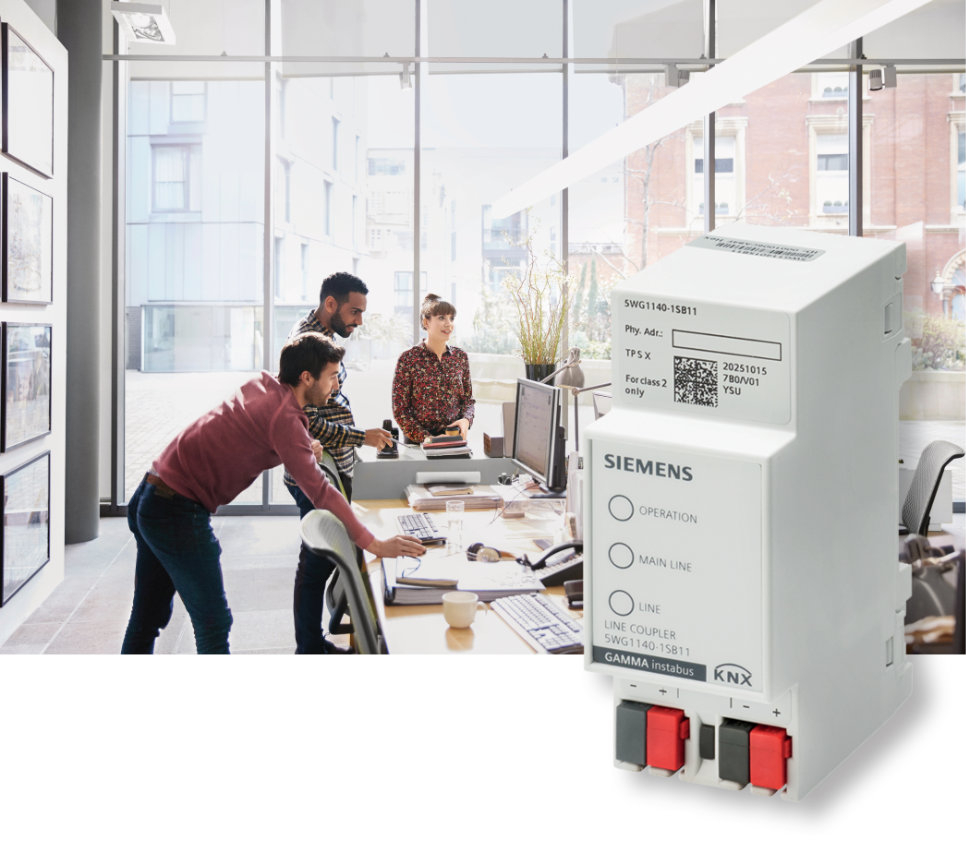
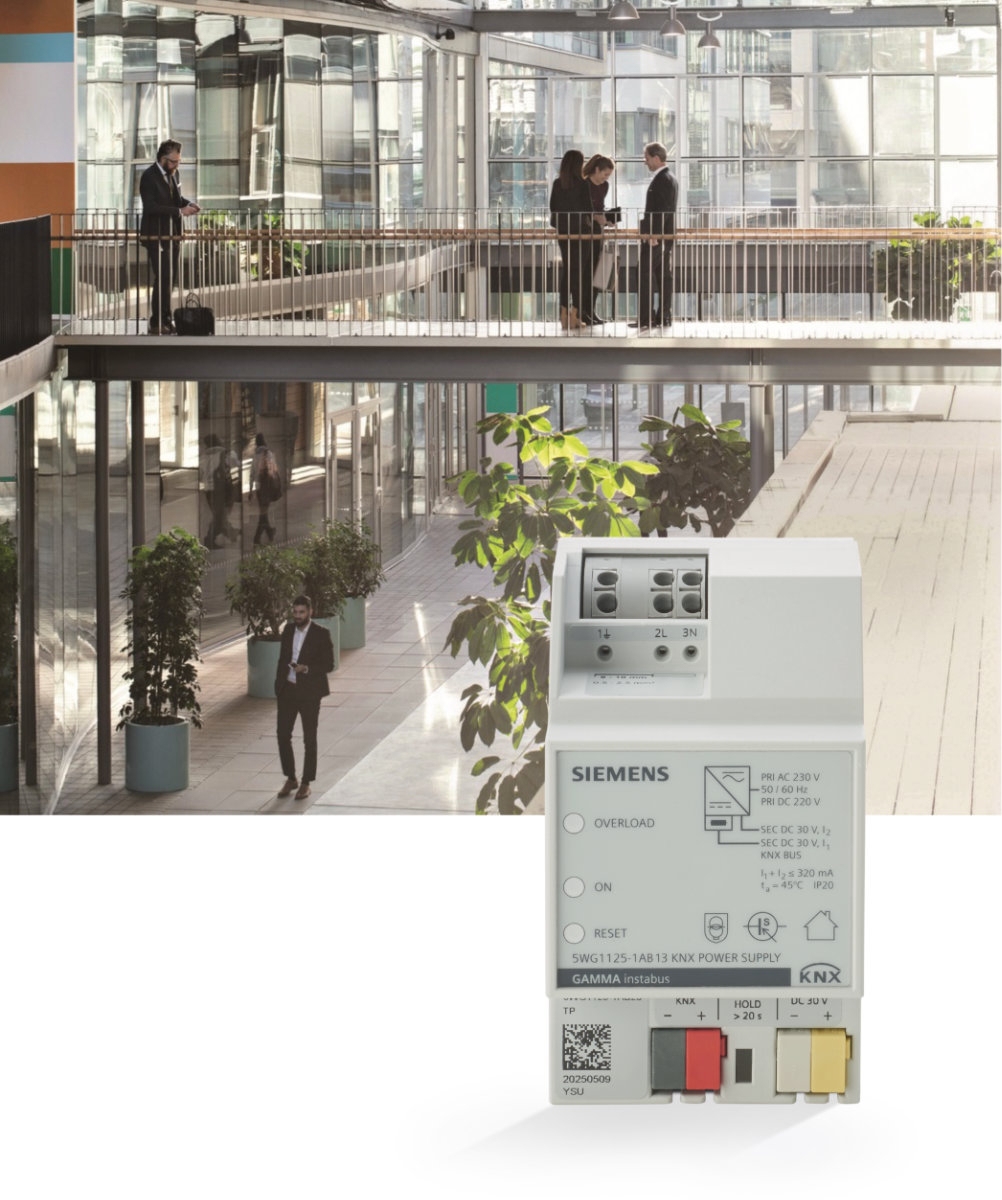
The Siemens KNX Secure Line Coupler is a future-proof building automation solution. It reliably connects KNX lines while providing the highest level of security for buildings. Thanks to KNX Data Secure, it protects communications from unauthorized access and tampering, making it the ideal choice for demanding projects. This line coupler enables flexible topologies and is ideal for organizing complex KNX systems into lines and zones. Its simple setup ensures quick and easy integration into existing systems, while its high performance guarantees smooth data flow and stable system operation. This means it is ideally suited to meet the demands of modern buildings. Whether in residential buildings, offices, or industrial facilities – the KNX Secure line coupler from Siemens is the smart choice for secure, efficient, and scalable building automation. Put your trust in proven Siemens quality and make your KNX installation ready for the future!
KNX Line Coupler Secure
A Power Source for Your Smart Building
KNX Power Supply
Smart KNX devices form the foundation of modern building automation. They provide seamless integration of lighting, heating, and environmental controls while reducing system complexity. The latest generation of Siemens KNX power supplies was developed with a focus on energy efficiency and sustainability. Take advantage of industry-leading energy efficiency (up to 0.7 W in idle mode and 3.6 W at rated power) as well as innovative features such as the convenient bus reset button and the versatile auxiliary output. Streamline your inventory with our focused 320-mA and 640-mA product line, which can be easily scaled up to 1280 mA. Maintenance-free plug-in terminals ensure an optimized loop-through process – so that building automation operates continuously and without outages!
KNX Power Supply
Smooth Commissioning
Wireless Sensors
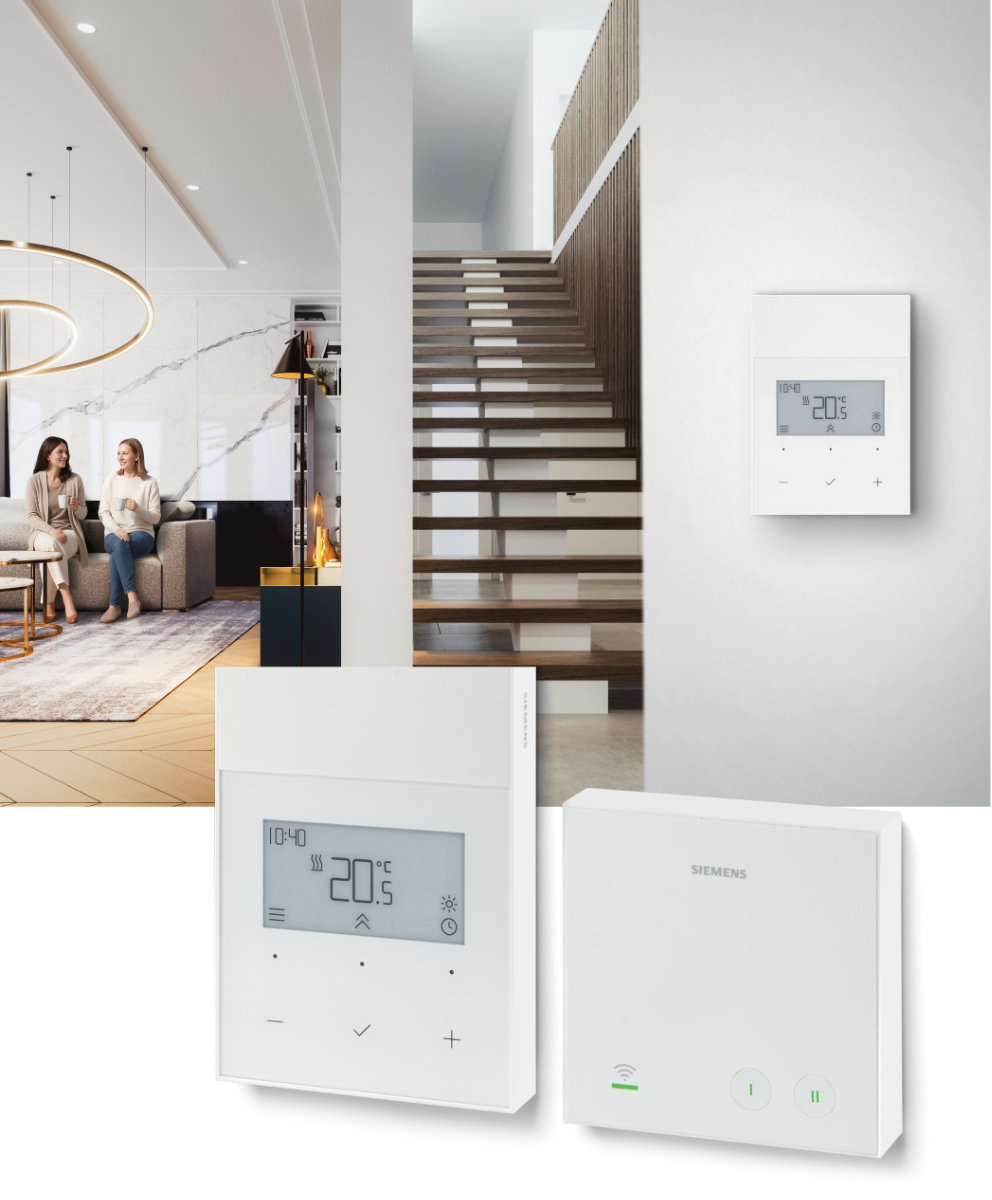
Sensors in buildings are essential components of modern building automation. They are used to measure physical conditions (such as temperature, motion, air quality, and light) in real time. With their modern design, Siemens’ wireless sensors blend seamlessly into the room’s aesthetic. Setup is quick and intuitive using the Siemens Quick Config smartphone app and NFC. The precise sensor data enables accurate control, thereby improving operational efficiency and optimizing energy consumption.
Wireless Sensors
Effortless Control for Lasting Comfort
RDL Room Thermostat
The RDL standalone room thermostat from Siemens offers precise, optimized control for both heating and cooling applications. It offers a wide range of features, including smart temperature control, multiple operating modes, and a programmable weekly schedule. The RDL series of room thermostats supports advanced applications such as reverse heat pumps, radiant floor heating, and cooling ceilings. Setup is easy using the Quick Config app or – depending on your preference – the intuitive user interface. The RDL room thermostat is specifically designed for use in residential buildings and offers flexible vertical/horizontal orientation as well as multilingual support. The flexible installation options include both wired and wireless options, wall or tabletop mounting, and battery operation. You can find more information here.
RDL Room Thermostat
Transparent Energy Consumption
SENTRON Powercenter 3000
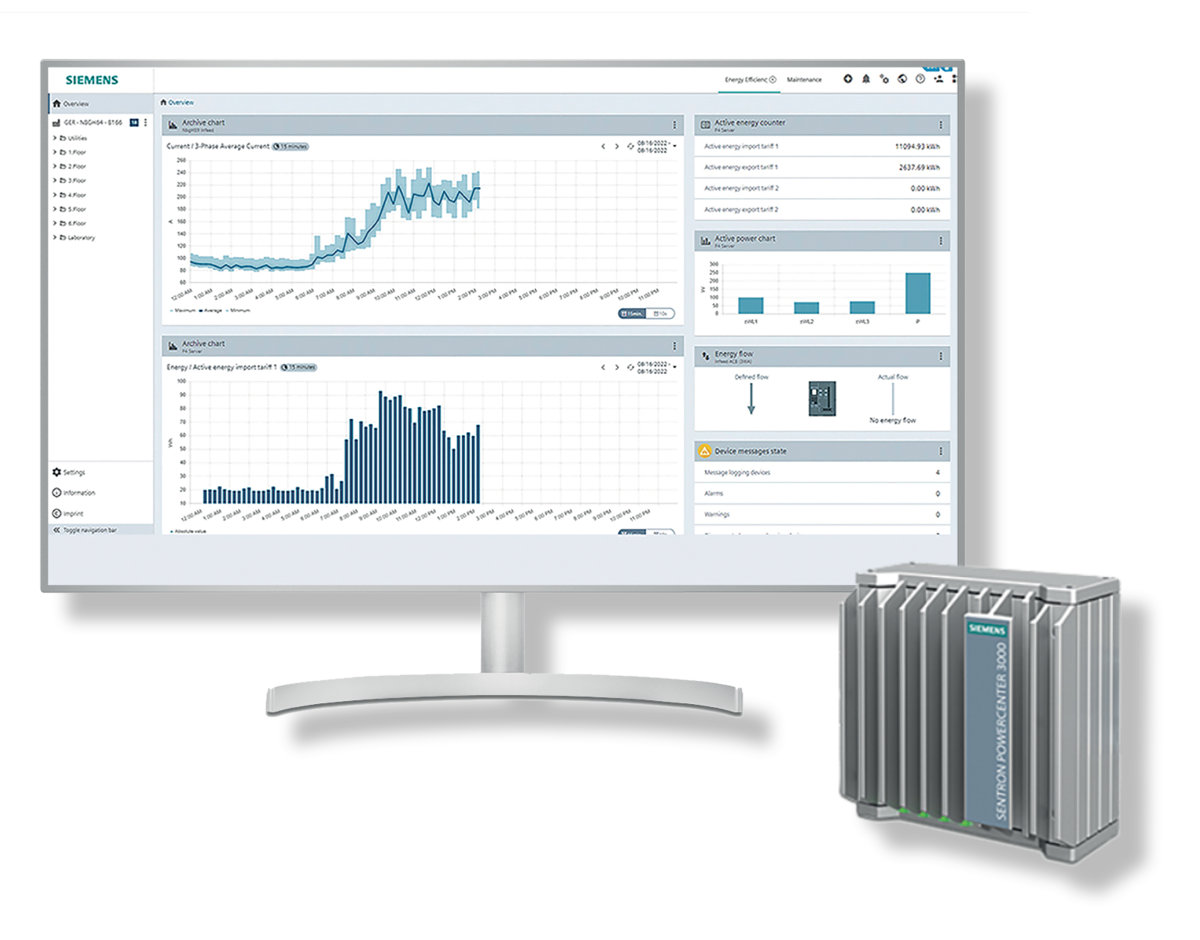
Managing energy data has never been easier: The SENTRON Powercenter 3000 software offers innovative energy and condition monitoring via a web interface over the local corporate network, with the option of connecting to Siemens Xcelerator or cloud-based solutions from other providers. The monitoring software enables targeted optimization through transparent energy consumption analysis and meets the documentation requirements of ISO 50001/50003. Integrated protective switching devices with measurement and communication capabilities enable predictive maintenance to reduce downtime. In addition, the system uses notifications to ensure early detection of malfunctions. The SENTRON Powercenter 3000 is a smart tool that helps companies understand, monitor, analyze, and ultimately optimize their energy consumption in order to reduce costs and improve sustainability.
The SENTRON Powercenter 3000 collects a wide range of energy data and displays it clearly.
Precise Temperature Control of Heating Loads
SIMATIC ET 200SP e-Starter
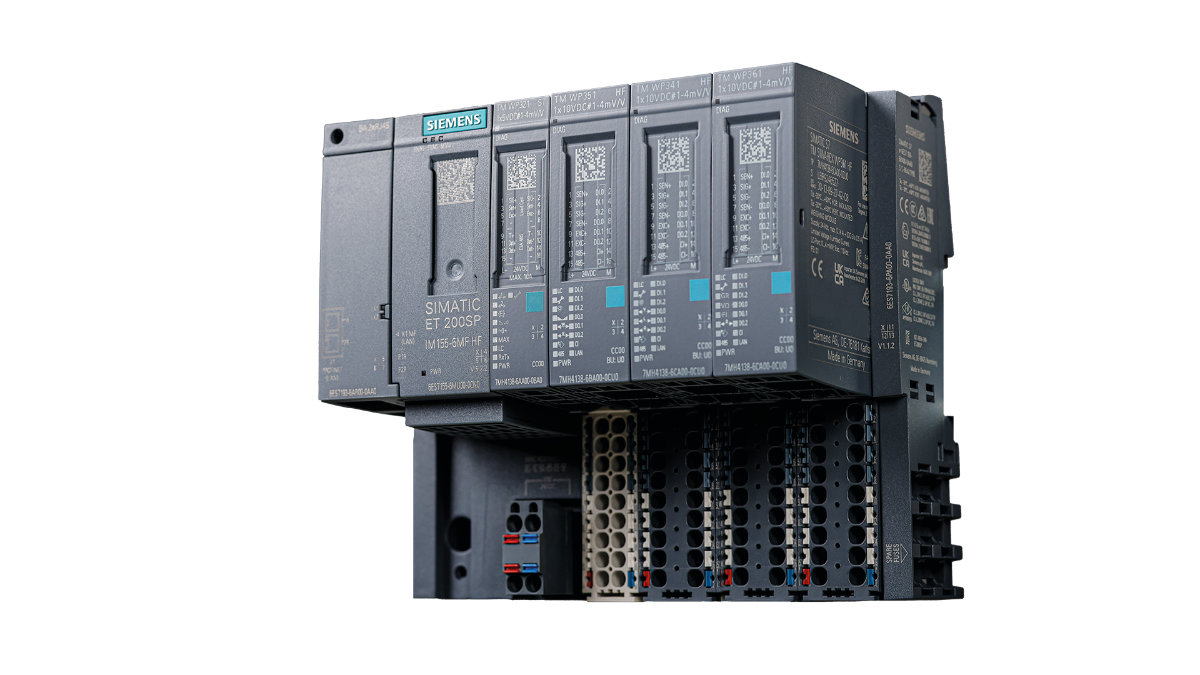
The multifunctional SIMATIC ET 200SP e-Starters are fully integrated into the SIMATIC ET 200SP I/O system. They are fully electronic switching and protection devices for single- and three-phase loads, featuring electronic short-circuit protection, reversing capability, and optimized starting characteristics. This makes them short-circuit-proof, low-wear, and extremely durable. A typical application for the SIMATIC ET 200SP e-Starter is reducing downtime caused by short circuits. For example, if there is an increased risk of a short circuit in a humid environment, the e-Starter detects a short circuit as it occurs, shuts down quickly enough to prevent significant short-circuit currents from developing, and thus protects the entire application. In applications with high switching frequencies and the use of highly efficient motors (e.g., IE3 / IE4), the integrated Smartstart reduces and neutralizes high starting and inrush currents, prevents false tripping of protective devices, and reduces mechanical stress during startup.
The SIMATIC ET 200SP e-Starter is a fully electronic switching and protection device.
A Future Made from Used Cooking Oil
Koppelrais SIRIUS 3RQ4
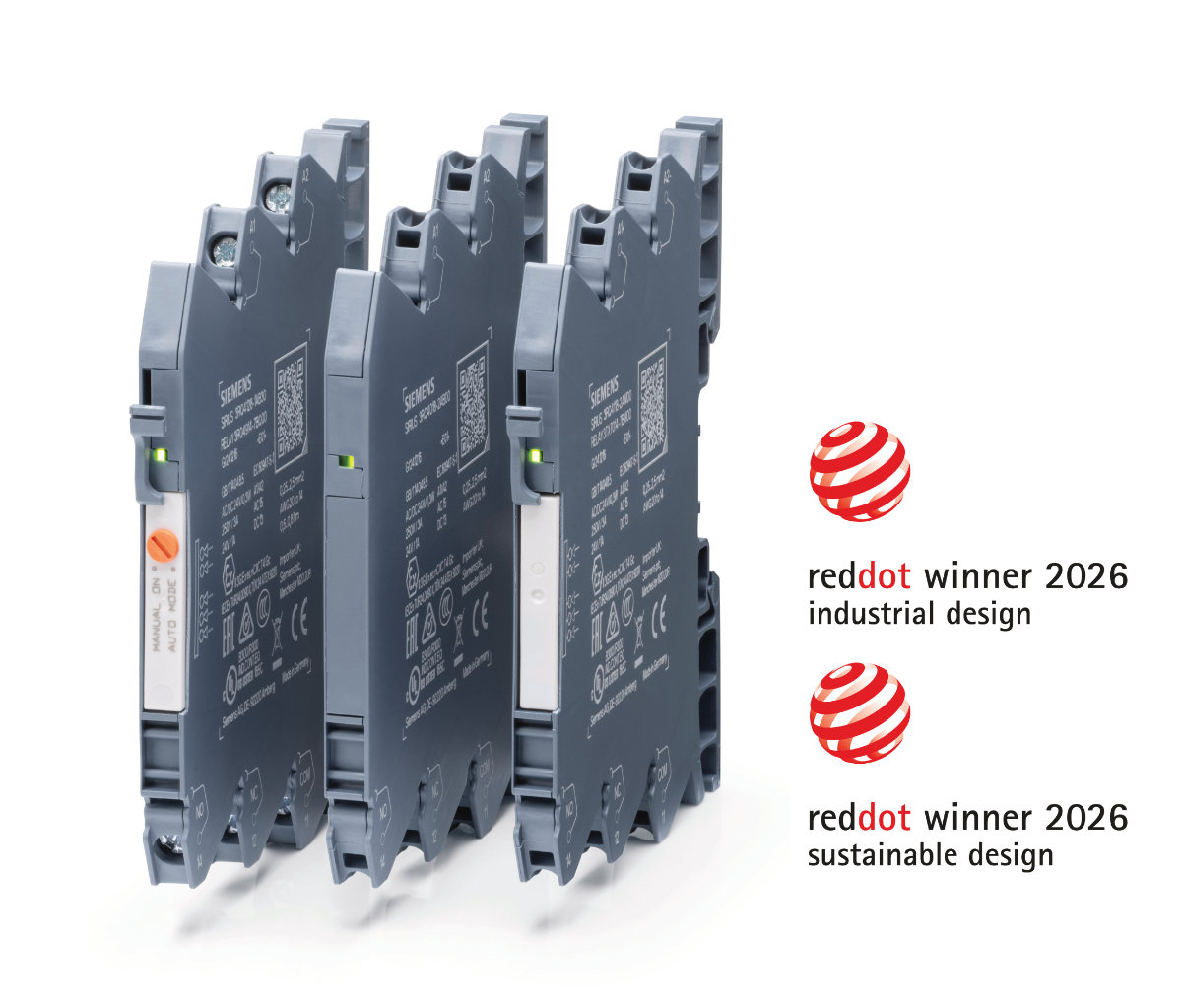
The SIRIUS 3RQ4 series coupling relays from Siemens offer a reliable, compact, and flexible solution for signal transmission between the controller and actuators. What makes it special: The plastic housing is made of 70 percent bio-based material derived from biomass waste. The Akulon® K225-KS B-MB plastic was developed by Envalior in collaboration with Siemens to ensure that all desired properties are met. With their slim design, these coupling relays are ideally suited for use with SIMATIC I/O modules and SIRIUS components. Whether with a relay output for rugged applications, a semiconductor output for high switching frequencies, or a plug-in relay for quick replacement – the 3RQ4 series stands out for its versatility, durability, and ease of integration.
The SIRIUS 3RQ4 coupling relay received two awards at the 2026 Red Dot Design Award: Product Design and Sustainability.
Expanding Control Cabinet Manufacturing in Vienna
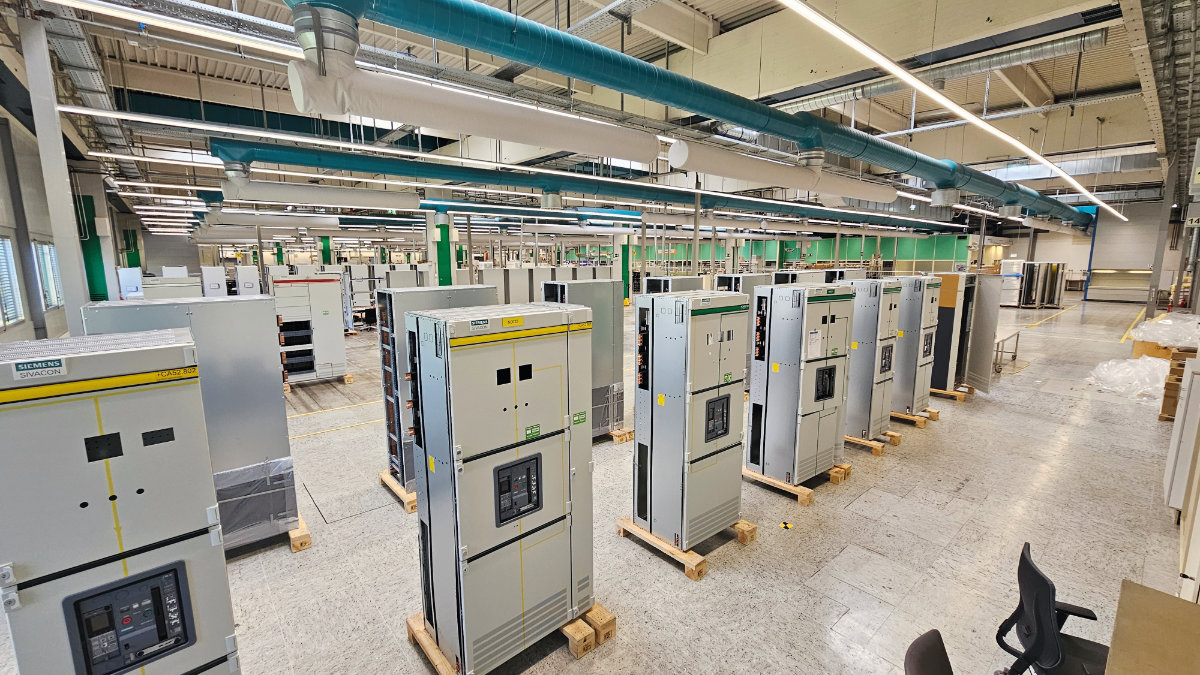
Expansion of SIVACON S8 Production
Siemens’ control cabinet manufacturing facility in Vienna’s Floridsdorf district is being expanded, thereby specifically strengthening local value creation. In the future, the secondary assembly of SIVACON S8 low-voltage switchgear will be handled by the Leipzig plant, and the Vienna assembly workshop will be licensed to meet Leipzig’s quality standards. The first system has already been successfully delivered and commissioned. The modular SIVACON S8 is used in a variety of applications, including the process industry, data centers, and critical infrastructure, and is known for its exceptional safety, reliability, and flexibility, combined with a high level of operational transparency.
Partnership with a nonprofit organization
At the same time, Siemens’ control cabinet manufacturing division is launching a partnership with Psychosoziale Zentren gGmbH (PSZ), an organization that supports people with mental illnesses in Lower Austria and Vienna by providing counseling, treatment, and services in the areas of housing, leisure, vocational integration, and prevention. Manufacturing and packaging orders are processed at a facility in Hollabrunn. Project-based work, such as connector assembly and the assembly of small control boxes, provides participants with hands-on experience. In this way, Siemens combines industrial value creation with social commitment while supporting the important work of PSZ gGmbH.
Expansion of the production area for SIVACON S8 projects at the Vienna site.
Youth Expertise for Sustainability
Siemens Technologies at the BULME Graz Smart Village.
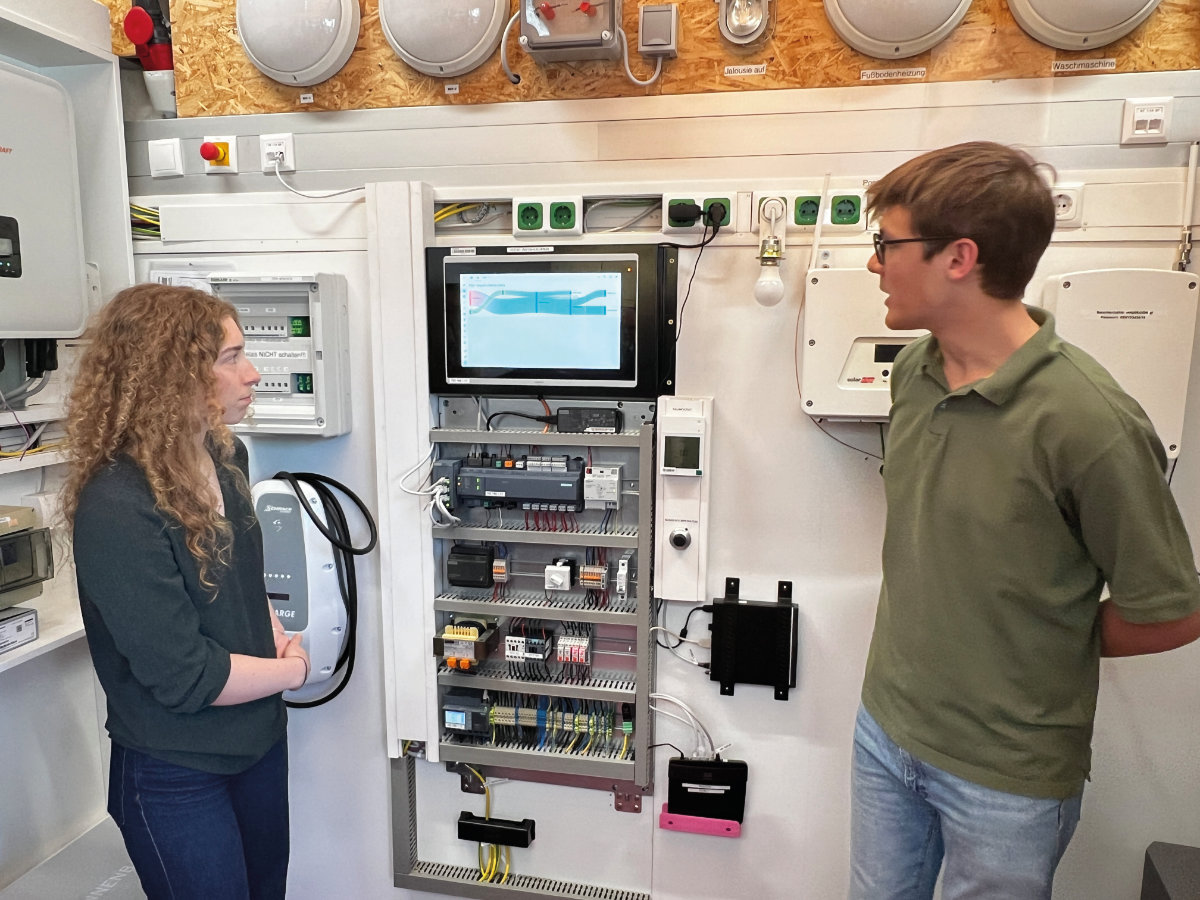
When education meets the realities of industry, solutions with a future are born. At the Smart Village at HLT BULME Graz, it was impressively demonstrated how Siemens technologies make complex energy and automation concepts a reality. The focus was on a thesis by Amelie Fuchshofer and Alexander Vallant, which consistently relied on Siemens solutions. At the heart of the project are SENTRON COM circuit breakers, which perform measurement and communication tasks in addition to their protective functions. They continuously provide data on current, voltage, and energy, thereby laying the foundation for transparent energy management. The integration of these components demonstrates the strength of the Siemens portfolio: Data is aggregated via the SENTRON Powercenter 1000 and transmitted to the building automation system via Modbus TCP. Central control is handled by a Desigo PXC5 automation station, which networks and optimizes all systems – from photovoltaic to heat pumps.
Intelligent system integration offers significant added value: Energy flows can be analyzed and optimized through targeted load control. The result is an efficient, automated heating system that meets the real-world demands of modern building technology. The PXM touch panel ensures transparency by clearly displaying all operating statuses and enabling intuitive operation. The system is complemented by Siemens software solutions such as ABT Site and SENTRON Powerconfig, which support end-to-end project configuration and commissioning. The project illustrates how Siemens offers an integrated ecosystem ranging from the field level to visualization – and how this can be applied in a practical way in training. At the same time, it underscores the importance of collaboration between industry and academia: Students work with real-world technologies and develop solutions that can be directly applied in practice. In this way, the Smart Village becomes not only a place of learning but also a showcase for innovative Siemens applications – and demonstrates how the energy world of tomorrow is already becoming a reality today.
Amelie Fuchshofer and Alexander Vallant are presenting their project.
Focus on AI and Digitalization
As part of a study involving 1,400 executives worldwide, Siemens assesses the progress of the infrastructure transition in the energy, industrial, and building sectors every two years.
The findings of the Siemens Infrastructure Transition Monitor in the building sector show that the energy efficiency of facilities and buildings is the top infrastructure priority for companies seeking to optimize their decarbonization efforts and competitiveness. In addition, the study shows that more than half of the respondents plan to increase their investments in energy efficiency (57%), smart building technology (55%), and the electrification of buildings (54%) in the coming year. More than half of the respondents (55%) say that digitalization has a significant or transformative impact on energy efficiency; 56% expect it to reduce costs, and 55% are convinced that it can improve employee health and safety. The Siemens Infrastructure Transition Monitor 2025 examines the evolution of infrastructure transformation, highlights the most pressing priorities, and charts a course forward for business and political leaders. The report is a biennial study commissioned by Siemens that surveys 1,400 executives and government officials from 19 countries in the energy, building, and industrial sectors.
Custom Deletion
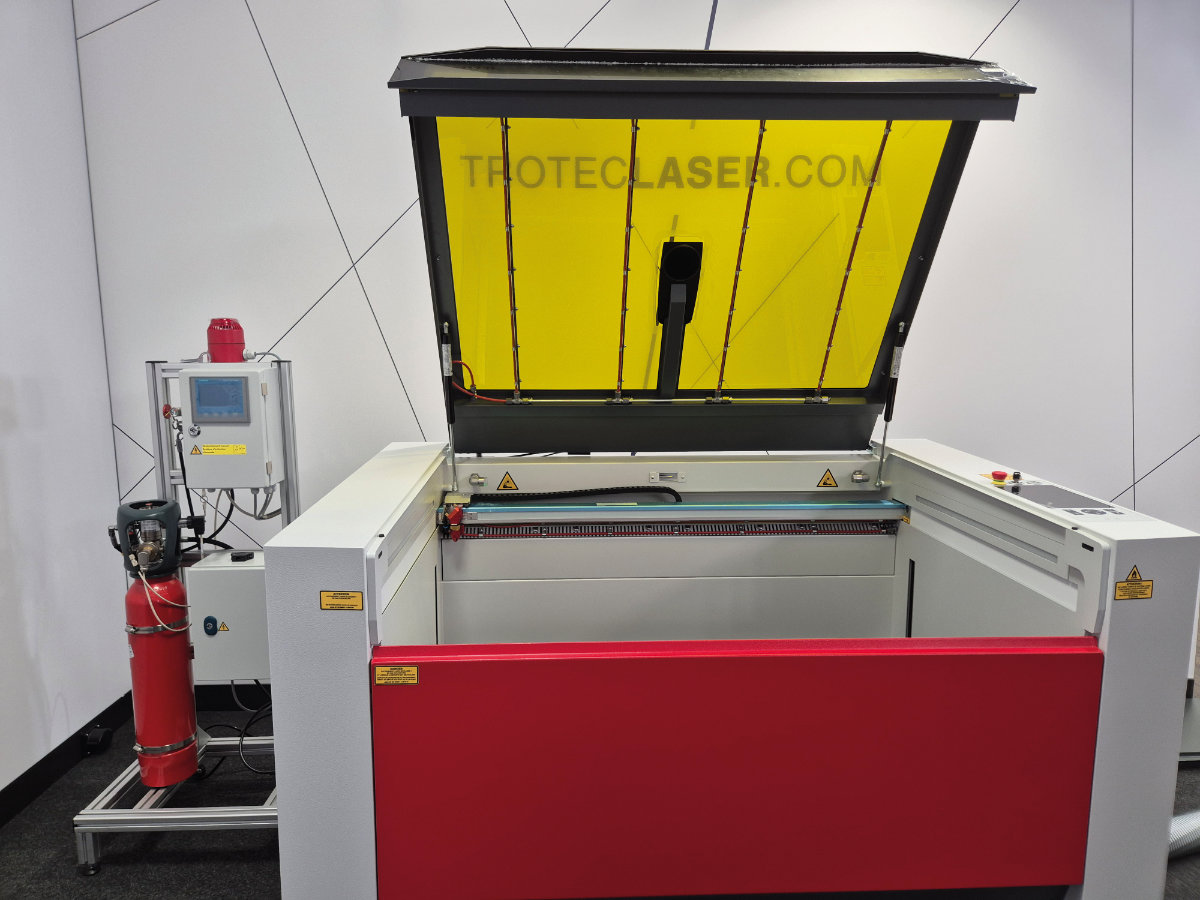
Siemens is developing a custom CO2 fire suppression system for Trotec Laser’s laser cutters.
The heat generated by laser technology when used on organic materials, combined with operator errors, poses a risk of machine fires, which can lead to downtime, costly repairs, and production delays. To prevent this, Siemens – as a strategic partner of Trotec Laser – has developed a customized solution for the Trotec CO2-flatbed laser Speedy 400 that – in the truest sense of the word – has it all. At its heart is the Sinorix Advanced object fire protection system – an integrated fire suppression system that provides comprehensive protection. The fully integrated, tested, and certified fire suppression system detects fires directly within the laser processing chamber and responds immediately. The system complies with safety standards such as EN ISO 13849-1 and ISO 19353:2019. The Speedy 400 is currently the only CO2-flatbed laser in the world that features a fully certified, machine-integrated fire suppression system. Learn more here.
Trotec Speedy 400 with an integrated, fully automatic fire suppression system – Sinorix Advanced Object Fire Protection.
Good planning is half the battle
„Dialog Energieverteilung“ überzeugt mit Live-Modellierung der Niederspannungsenergieverteilung eines fiktiven Logistikzentrums.
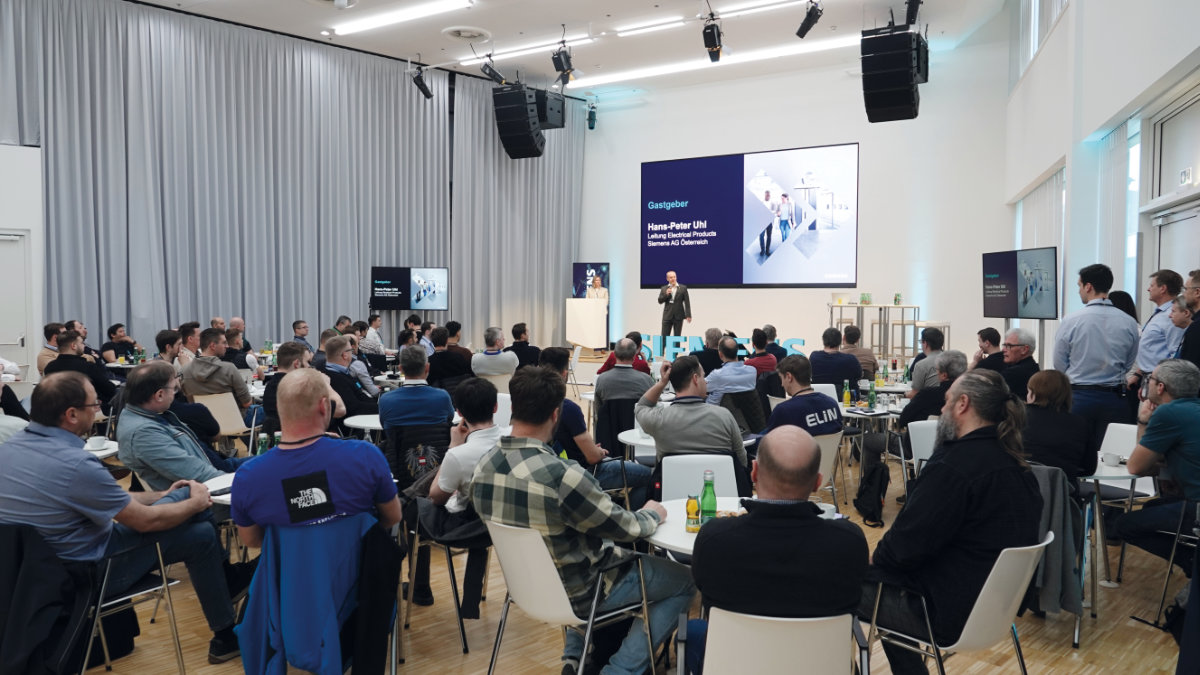
This year’s “Energy Distribution Dialogue,” held at TechBase Linz in March, was aimed at electrical designers, electricians, switchgear manufacturers, and plant operators. “The goal is to spark interest in our products and solutions,” explains Siemens expert David Schwinghammer. “We wanted to make the project planning more tangible – so we modeled the low-voltage power distribution system of a fictional logistics center in real time.”
Live on Stage with SIMARIS Design
To ensure realistic planning of the power grid, the Siemens team relied on the SIMARIS Suite tools, specifically SIMARIS Design. Software from the Totally Integrated Power (TIP) suite makes it possible to plan, size, and calculate even complex power distribution systems. “This allowed us to map out the entire design of the logistics center – from the transformers to the electrical outlets,” said Schwinghammer. “What was particularly exciting was that we combined the selection of components directly with spontaneous input from the low-voltage (SI EP) and medium-voltage (SI EA) product groups.” The big advantage: Because the content was so closely tied to real-world practice, participants were able to immediately contextualize the solutions and better understand their benefits – much more clearly than they would have in a traditional lecture. The event was complemented by a mini-expo featuring real, hands-on exhibits: such as the SENTRON 3WA open-type circuit breaker, various SENTRON protective devices with measurement and communication capabilities – including the new, revolutionary ECPD – and a SIVACON 8PS BD2 busbar with a junction box. That’s how digital planning became a fully immersive experience.
New building automation system at the Palais Coburg in Vienna.
Project
Listen to article
Premium Technology at the Palace
0:00
0:00
1.0x
Historic buildings with a modern twist: As part of the renovation of Vienna’s Palais Coburg, the building automation system is also being upgraded.
The Palais Coburg in downtown Vienna has been a landmark of the city for over 180 years. Since 2025, the historic building has been undergoing renovation to become an elegant guesthouse – complete with innovative building technology from Siemens. While the hotel is temporarily closed due to renovations, the 2-star restaurant Silvio Nickol and “Clementine im Glashaus” remain open to guests and food lovers. The 36 suites are being modernized under the theme “Quiet Luxury” to combine historic charm with personalized luxury – and this, of course, includes state-of-the-art building technology that works behind the scenes to ensure the highest level of comfort for guests.
“As part of the MSRL replacement project at the Palais Coburg, we were able to experience an exceptionally constructive and collaborative partnership between PFG Real Estate AG, acting as the owner’s representative, and Siemens,” said Rinaldo Baumann, Deputy Director of PFG Real Estate AG. Of course, there were challenges as well. Integrating modern building automation into historic structures has its challenges, such as risks related to interfaces, scheduling, and, not least, costs. Philipp Nossek, Sales Manager at Siemens Austria, is well aware of this, of course, and emphasizes: “I am particularly pleased that, together with the operators of the Palais Coburg, we were able to implement a reliable, future-proof, and energy-efficient automation solution that provides long-term support for the operation of this extraordinary building.”
“The collaboration was characterized by a high level of professional expertise.”
Rinaldo Baumann, , Deputy Director of PFG Real Estate AG
Tradition combined with modern building technology
The new building automation system is modular, expandable, open, and future-proof. Using Siemens PXC7 controllers and the Desigo CC building management system, Flex Client access was set up for the customer via the Building X Operations Manager. This is a remote access system that allows the building’s technical systems to be accessed – and, if necessary, controlled – from anywhere. This helps reduce operating costs and prevent downtime. The core function of building automation is the comprehensive control and monitoring of heating, ventilation, and air conditioning (HVAC), lighting, shading, and energy management in buildings. Thanks to their IP connectivity, the built-in controllers enable seamless integration into existing IT infrastructures and offer a flexible system architecture. Baumann is enthusiastic about the project: “The collaboration was characterized by a high level of expertise, clear communication, and a shared understanding of quality, deadlines, and project goals.” Thanks to close coordination among all parties involved, complex requirements were efficiently managed and implemented in a solution-oriented manner. “This project serves as a prime example of how professional owner representation and an experienced technology partner can ensure the project’s long-term success through mutual trust, reliability, and commitment.”
Fire detection using FibroLaser at standard parts manufacturer Meusburger.
Project
Listen to article
Early Detection Instead of a Fire Alarm
0:00
0:00
1.0x
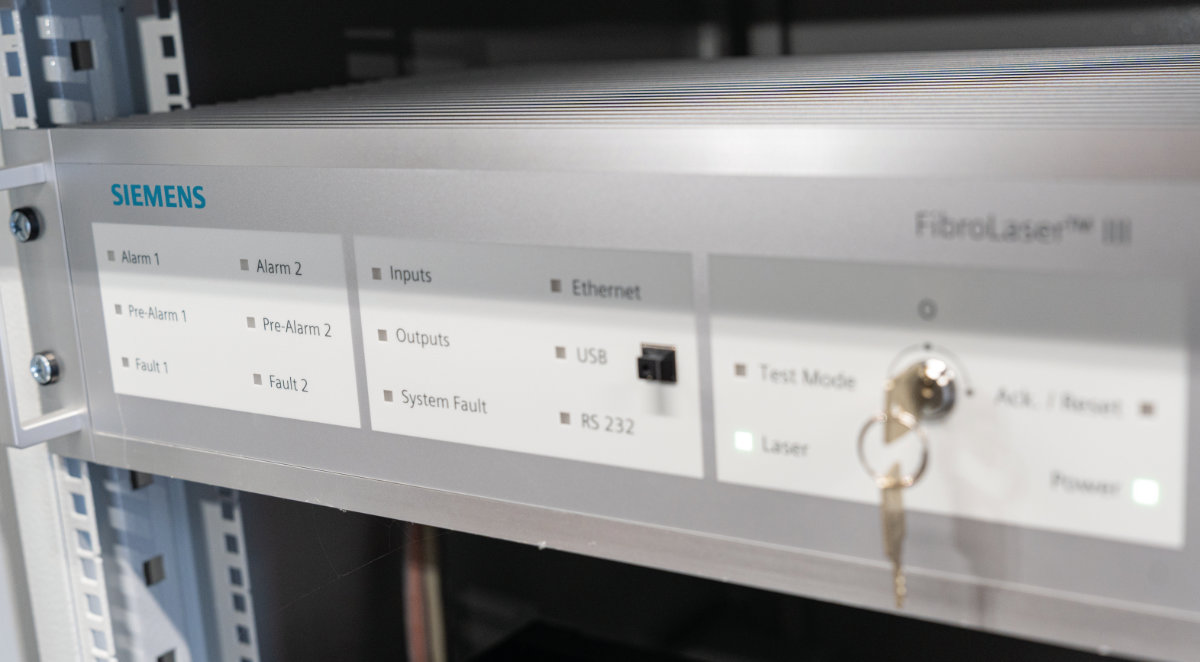
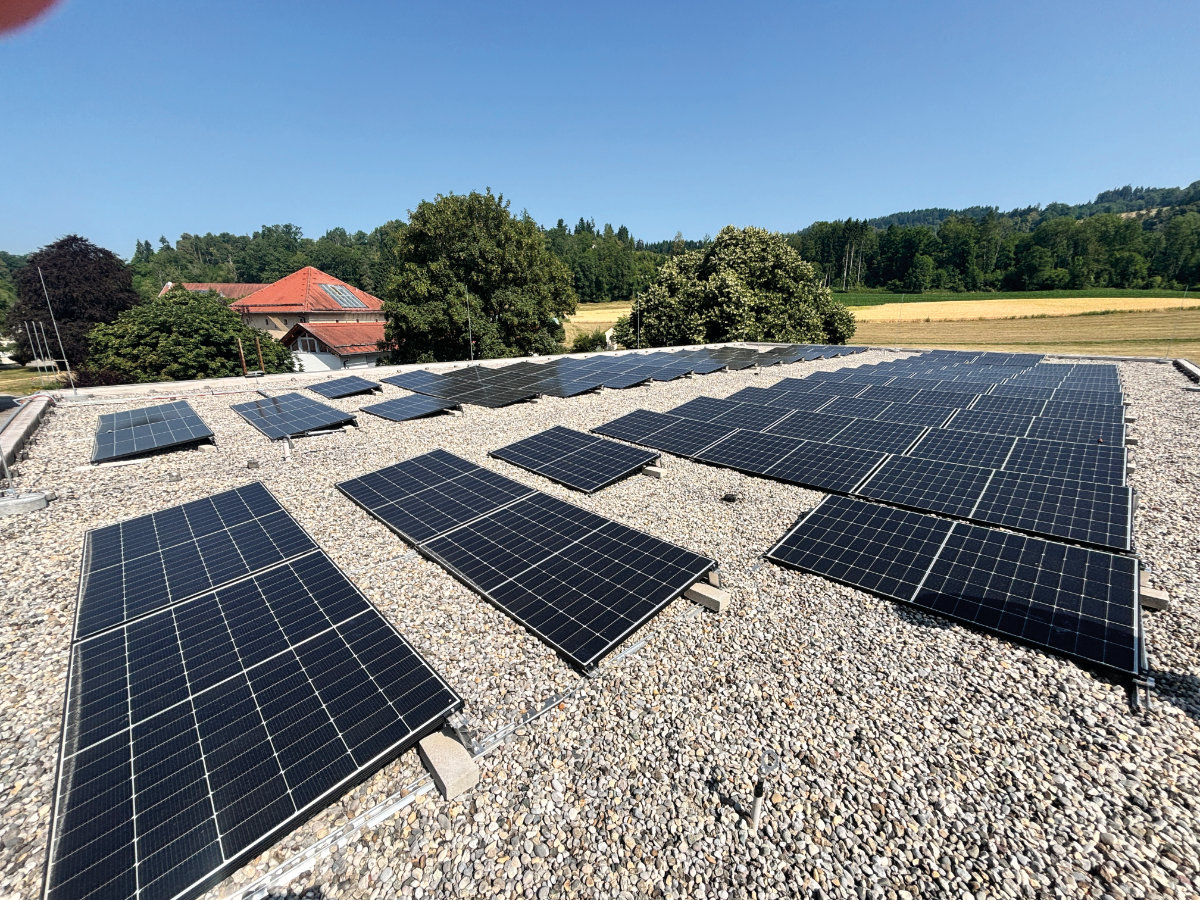
Meusburger, a standard parts manufacturer based in Vorarlberg, recently invested in a large-scale photovoltaic system on the roof of its facility in Wolfurt. Siemens equipped the solar power plant with the FibroLaser early-fire-detection system, which detects sudden temperature differences in a linear manner and thus reports fires more quickly and with greater spatial accuracy than previous point-based systems.
Meusburger, a family-owned company, is the market leader in the manufacture of high-precision standard parts for customers in the tool, mold, and machine building industries. By installing a solar power system with a capacity of 1,275 kWp and 3,000 modules, the Vorarlberg-based company has now put the plant’s energy supply in Wolfurt on a sustainable footing. Since the roof on which the modules were installed is not fire-retardant, a guideline required an additional system to detect fires early. “The primary fire hazards are faulty or loose plug connections, as well as so-called power optimizers, whose electronics can overheat,” explains Simon Schreiber, Siemens sales manager in Vorarlberg. “However, it is highly unlikely that the PV modules themselves would catch fire.”
With FibroLaser, an alarm is triggered early enough to allow a fire to be contained in a timely manner.
Faster and more accurate than expected
The system used was arguably the most advanced early-warning fire detection system currently available on the market. Schreiber: “We installed a linear heat detection system, the FibroLaser, at Meusburger.” A special ring-shaped fiber-optic cable is laid beneath the modules and connected to a controller, which processes the data and is linked to the existing Siemens fire alarm system. The fiber-optic cable has an FRNC jacket (Flame Retardant Non-Corrosive, HM4) and is therefore UV-resistant, halogen-free, and flame-retardant. , the operating temperature ranges from –25 to 85 °C. A particular advantage: Since the FibroLaser uses an optical fiber and therefore does not require copper cables, even lightning strikes do not cause the fire detection system to fail.
“The FibroLaser continuously sends a laser beam into the fiber-optic cable,” explains the expert. If there is a significant rise in temperature within a predefined time frame, or if a specified maximum temperature is reached, the curvature of the optical fiber changes, and the system can pinpoint exactly where the event occurred. “The pre-alarm, which is triggered immediately, responds so quickly and pinpoints the location of the incident so precisely that, if necessary, even an employee with a hand-held fire extinguisher can arrive on the scene in time to contain the fire before it spreads over a large area,” said Simon Schreiber. Otherwise, an alarm will be triggered and the fire department will be notified automatically. In addition to pre-alarms and alarms, malfunctions in the fire alarm control panel and the Sicontrol security control station from Meusburger are also displayed.
Linear detection instead of point-by-point detection
Since the optical fiber operates linearly – rather than point-by-point like other systems – the FibroLaser detects a fire extremely quickly and triggers the alarm early enough. Systems based on point-to-point detection cannot match this performance: If a fire breaks out, for example, exactly between two detectors, the fire may have already spread before it reaches a detector, which then triggers the alarm only after a significant delay. This is bound to cause massive damage to the PV system and the building. Schreiber: “We have invested a great deal of energy and our many years of experience in monitoring photovoltaic modules – not least in light of the wide temperature range across the different seasons, during which the system must detect rapid temperature increases.” The result is a reliable early-warning fire detection system whose operational suitability, availability, and reliability have already been impressively demonstrated in several projects. And best of all: FibroLaser is suitable for new PV systems, but existing systems can, of course, be retrofitted with it as well.
Fire Safety and Security for a research facility in North Macedonia.
Project
Listen to article
Flower Power
0:00
0:00
1.0x
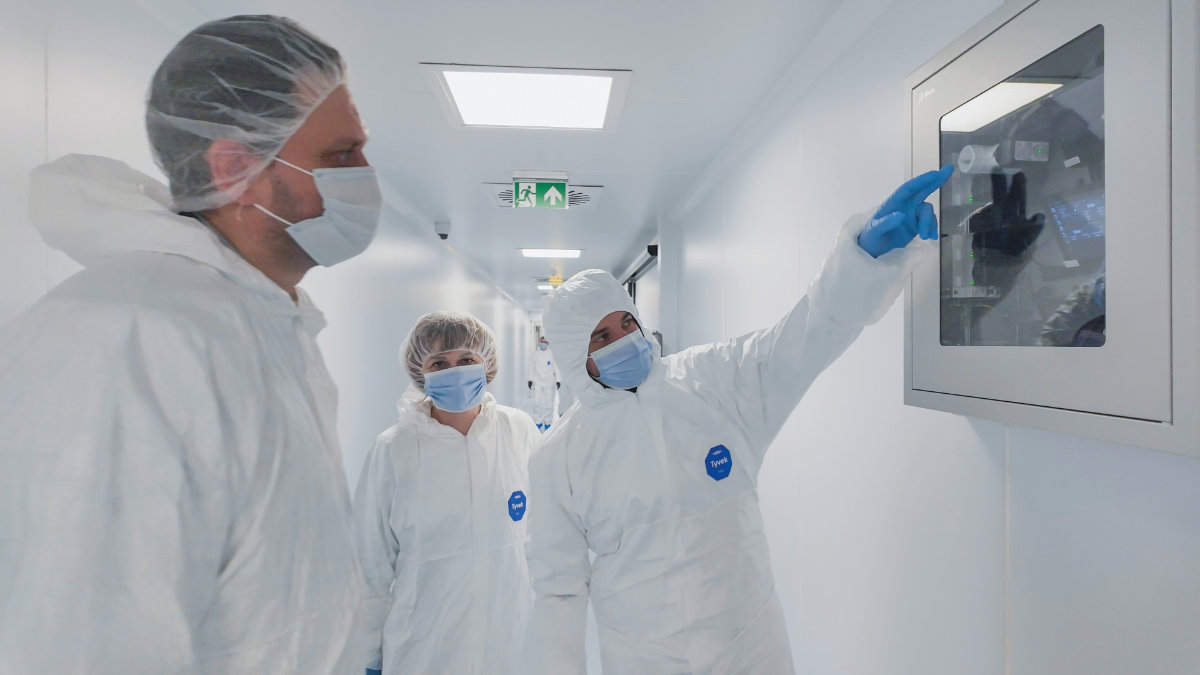
The Flower Power research and production facility in North Macedonia is the world’s first fully sustainable pharmaceutical plant for medical cannabis.
Flower Power is a medical cannabis facility in Vevčani, North Macedonia. With an area of 4,000 m², it serves as both a research and production facility – and is making a name for itself as the world’s first fully sustainable pharmaceutical plant. The facility is powered by solar energy, draws on natural spring water, and uses entirely organic growing cycles. As a pharmaceutical plant and medical cannabis producer, Flower Power is also subject to strict guidelines, such as those regarding cleanroom standards. To meet these requirements while also achieving its own goals regarding energy efficiency, production continuity, safety, and transparency, the company relies on support from Siemens. The jointly developed solutions were commissioned in collaboration with Tehnoinspekt, the local partner in North Macedonia, and include the Desigo CC building management system, Desigo PXC building automation controllers, and KNX devices for building and field automation. This reduces energy consumption – and thus operating costs as well. A wide range of software solutions from the Building X Suite, which is part of the Siemens Xcelerator platform, provides additional efficiency and convenience.
Flower Power Reference Photo: Siemens Solutions
Among other systems, the Operations Manager – which enables real-time remote control of building systems – and the Energy Manager – which tracks energy consumption, costs, and CO₂ emissions with the goal of reducing them – were implemented; as well as the Security Manager, which, among other things, ensures the protection of people and assets and enhances the resilience of buildings and business continuity. To ensure optimal security, the integrated Cerberus PRO fire protection system and the SiPass integrated access control system were put into operation. Integration with Fire Connect enables remote monitoring of the connected fire protection systems. In addition, Siemens is responsible for the low-voltage equipment and the pilot installation of the SIVACON S4 power distribution cabinet.
The first phase of the project was completed in December 2025. The second phase is already underway and is scheduled to run through the end of 2026.
PBI Group in Poland relies on certified fire protection technology from Siemens.
Project
Listen to article
Non-volatile Storage
0:00
0:00
1.0x
PBI Group relies on certified fire protection technology from Siemens – featuring an IoT-enabled suppression system that uses environmentally friendly, residue-free agents.
In addition to the quarry, the Budy site houses a technical laboratory, a bitumen plant, and the company’s logistics center. “The PBI Group has had a PV system and a battery storage solution installed on its company premises,” explains Ireneusz Kolendra, Regional Sales Engineer at Siemens in Poland, adding: “The PV technology comes from Soon Energy Poland, which is part of the EDP Group, Poland’s largest international investor in renewable energy.” The battery storage system is provided by Naatu, a leading technology supplier of energy management and microgrid solutions. “The company purchases a large quantity of our inverters and protection products for various projects,” said the regional sales engineer, “and for this hybrid EPC project for the PBI Group, they also relied on our fire protection technology.”
Sustainable Security
Although lithium-ion batteries are generally considered safe, there are still fire risks. These problems can be caused, for example, by stacking the batteries too high, damage to the battery, or the use of the wrong charging equipment. To protect against these and other hazards, Naatu’s battery storage system was equipped with a Sinorix NXN fire suppression system that uses environmentally friendly, residue-free agents. The solution uses 140 liters of IG-100 (nitrogen) as the extinguishing agent and Cerberus PRO as the software. The IoT-enabled system combines all aspects of fire protection, from detection to suppression. At the Budy site, this was implemented using a fire alarm control panel with two loops and the corresponding fire suppression map. Two multisensor smoke detectors with Advanced Signal Analysis and a dual-wavelength aspirating smoke detector ensure the earliest possible warning in the event of a potential fire.
Certified Protection
The hybrid EPC construction project, which expands the energy mix at the Budy site to include solar power, has been completed, and the corresponding fire protection system is now operational as well. “In addition to ensuring flexibility and sustainability, Sinorix NXN with Cerberus PRO stands out above all because it is, to date, the only solution to have been certified by VdS Schadenverhütung for the protection of battery storage systems.” “The institution is a global leader in the fields of corporate security and safety,” Kolehndra summarizes. The solution is designed for an energy storage capacity of 500 kW/1,250 kWh.
The new NIS 2 and “NISG 2026” regulations protect buildings and technical systems.
Portfolio
Listen to article
Staying One Step Ahead of Hackers
0:00
0:00
1.0x
How NIS 2 and “NISG 2026” Protect Buildings and Technology – and How Siemens Supports Its Customers in This Effort.
The digital world is evolving rapidly; our buildings are more interconnected today than ever before – and cyberattacks are becoming increasingly sophisticated. This is precisely where the new EU-wide NIS 2 Directive and Austria’s “NISG 2026” come into play. The new regulations, which focus on comprehensively strengthening cybersecurity, are aimed at a wide range of companies and organizations that are of great importance to our society and economy – from energy providers and transportation companies to healthcare facilities and digital service providers. It does not matter whether systems are managed internally or by external partners: they typically fall within the scope of the new security requirements.
What can building operators expect?
To meet the new requirements, it is advisable to begin in a structured manner by creating an overview of all relevant building and security technology systems and locations. For building operators, this means, in practical terms, implementing active risk management to identify vulnerabilities in network and information systems and address them with appropriate measures. In the event of an emergency, a rapid response to security incidents must be ensured, including clearly defined reporting channels. Responsibility for cybersecurity lies explicitly with management and must be verifiable through policies and regular audits. Partner companies must also meet certain standards, such as those related to remote access or the provision of updates. Regular monitoring through audits and tests is essential to ensure the long-term effectiveness of security measures.
Laying the Foundation for Safety During the Planning Phase
Even before a project begins, it is important to know exactly which systems will be used and what risks might exist. A detailed assessment, planning, and evaluation of criticality are the first steps here. The security requirements are then incorporated into requests for proposals and contracts. This includes, for example, the ability to update systems (patches), clear rules for access rights, and the use of secure authentication methods such as multi-factor authentication. Ideally, building automation systems should run on a separate, secure network segment, isolated from the regular office IT infrastructure, to minimize the risk in the event of an attack. Before a system goes live, a comprehensive “security acceptance” is conducted, during which all security aspects are reviewed and documented.
Stay Alert and Take Action During Operations
Even after installation, ongoing attention is required. This includes regular updates for cameras, servers, and other components. For older systems that can no longer be updated, special protective measures or the replacement of these components is required. Comprehensive monitoring ensures that anomalies or attempted attacks are detected immediately. Regular backups and tested recovery plans ensure that the systems are back up and running quickly even after an incident.
Siemens: Your Partner for a Secure Future With their expertise and a comprehensive portfolio, our experts support our customers in meeting the requirements of the NISG 2026 securely and efficiently.
Cybersecure products: from secure communication protocols such as BACnet Secure Connect to encrypted connections.
Secure OT Network Architectures: We help you connect your building systems optimally and securely.
Comprehensive security services: These include monitoring your assets and vulnerabilities, as well as update and upgrade services.
Gap Assessments: We analyze the current state of your building and security systems and identify areas where action is needed.
Compliance Support: We help you with documentation and preparing for audits.
As a technology partner, Siemens ensures that the building and security systems are not only state-of-the-art and resilient, but also that your requirements for compliance with NISG 2026 and other regulations are met. This allows our customers to focus on their core business while our experts ensure the security of their infrastructure.
Robert Paurtisch believes that cybersecurity today must be just as much a given as physical security measures – such as access controls or fire safety, for example.
However, Pauritsch – who, as Product and Solution Security Officer at Siemens Austria, is responsible for the cybersecurity of all products and solutions in the building technology sector – knows from his many years of experience that this is not yet the case. “For companies, the question isn’t whether they’ll be hacked, but simply when. “And the rule here is: if you’re well prepared, you can keep your business running,” said Pauritsch. With an ever-increasing number of connected products, digital solutions, and – not least – state and EU-wide regulations, cybersecurity is taking center stage. In light of the growing need, what was once a single role is now evolving into an entire team. That is why, starting in October 2025, Robert Pauritsch has been building an entire department to meet the long-term demand for cybersecurity solutions using state-of-the-art technology.
“One of our most important tasks is to raise awareness of the risks that lurk when a company is unprotected. “Using what’s known as a gap assessment, we work with our clients to identify where the gaps are – and develop a plan for how to close them,” explains Pauritsch. The 37-year-old is very familiar with the products and solutions in the building technology sector: He has been with Siemens for 15 years and has held his current position as Product and Solution Security Officer since 2018. However, he laid the foundation for his career somewhere else entirely: with an apprenticeship in electrical engineering in Styria. In 2011, he moved to Siemens, where he initially commissioned technical systems.
A lot has happened since then: Robert Paurtisch first developed a robust IT portfolio for the building services market and then went on to specialize in cybersecurity, all while pursuing training, education, and certifications. Today, the 37-year-old is deeply rooted in cybersecurity and knows: “The once elusive field of cybersecurity has definitely moved beyond its adolescence and into adulthood, and now offers concrete protection and measurable added value for companies.”
Daughters' Day and training with benefits at Siemens Austria.
Career
Listen to article
Highly Trained
0:00
0:00
1.0x
Technology for Daughters
This year, girls aged 14 to 18 once again visited Siemens locations in Vienna, Innsbruck, Salzburg, and Linz to get a taste of what it’s like to work at the company during Girls’ Day and Vienna’s Daughters’ Day.
At the Visitor Center and the Training Center in Siemens City in Vienna-Floridsdorf, the girls explored various technical career fields. One of the highlights was modern building technology: Siemens experts demonstrated how smart technology works – from fire protection systems to security systems and building automation. How does a building detect a fire? How do alarm systems and access control systems work? And how can indoor comfort be controlled automatically? As a hands-on exercise, the teenagers practiced using soldering irons and electronic components, and in the process built a small electronic circuit that they were allowed to take home as a souvenir.
A Look into the Future
Training Opportunities at Siemens Austria
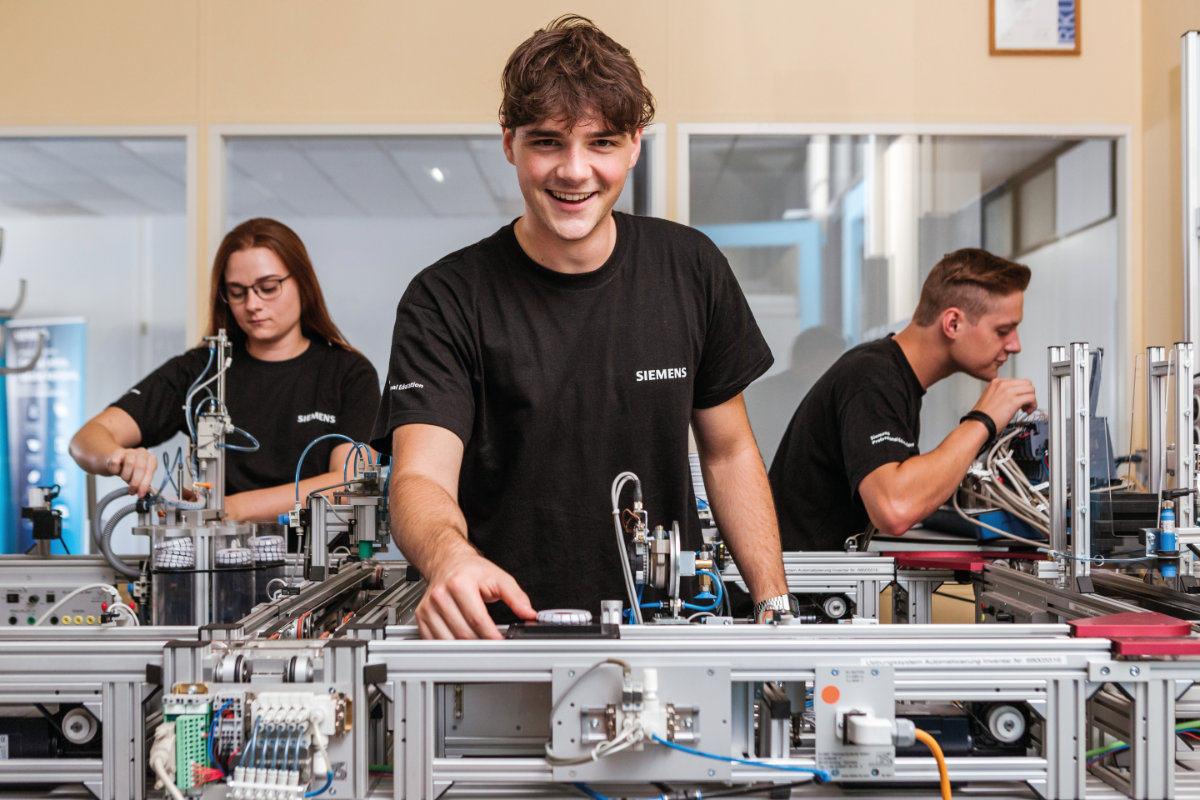
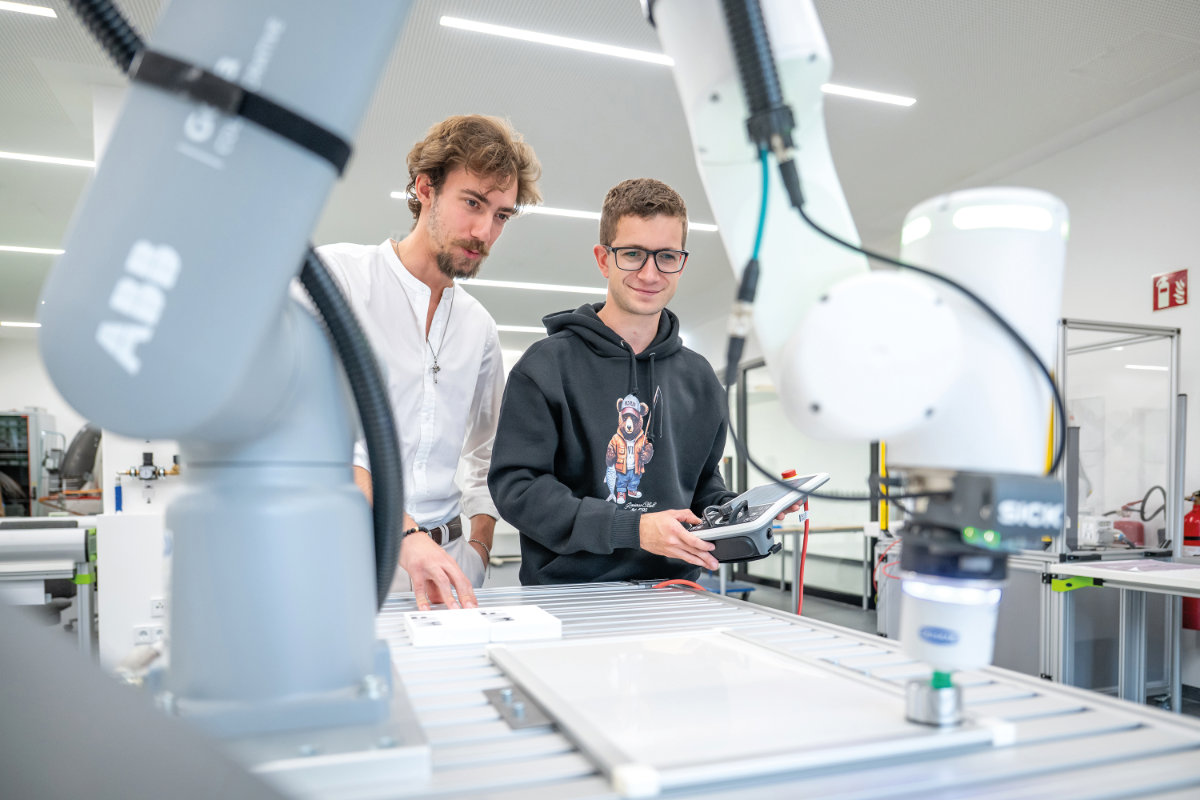
Siemens in Austria offers 17 different apprenticeship programs in the business and technical fields, as well as various models: ranging from a traditional apprenticeship with or without a Matura to a study program integrated with vocational training – offered throughout Austria in cooperation with various universities – to the Digital Systems Professional program. Particular emphasis is placed on the topics of digitalization, sustainability, and Industry 4.0. Building expertise in areas such as cloud computing, machine-to-machine communication, additive manufacturing, network technology, and robotics also requires tailored teaching approaches and methods for conveying this new content.
Training with Benefits
In total, Siemens Austria trains 300 young professionals, and approximately 100 apprentices are accepted each year. The benefits of an apprenticeship are obvious: job security, good career prospects, and an above-average salary are just a few of the incentives. Through an apprenticeship at Siemens, young people gain the expertise they need for a successful future career. There are still a few training positions available for the September start date. Learn more here.
Therma Nova: a flagship project in energy optimization.
Project
Listen to article
Water, Heat, Wellness
0:00
0:00
1.0x
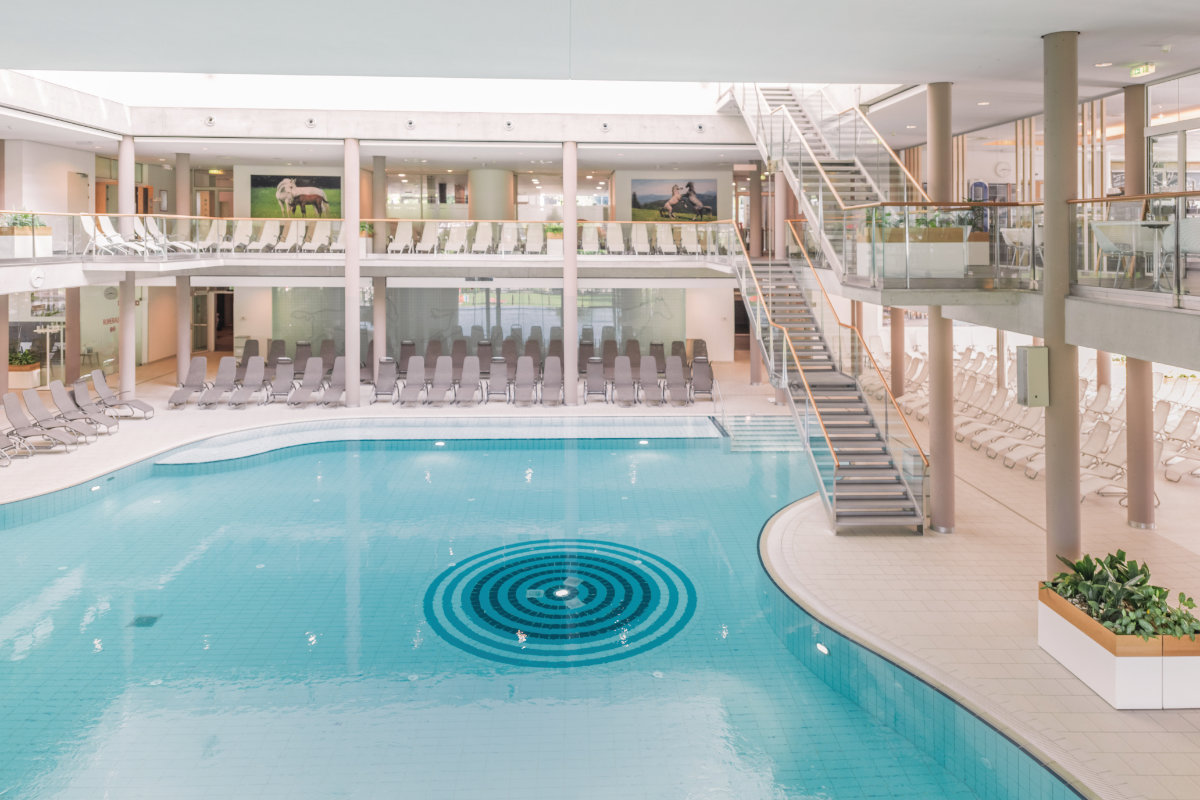
The modernization of Therme Nova has become a showcase project in the field of energy optimization.
The Therme Nova in Köflach, near Graz, offers approximately 1,000 m² of water surface area spread across several pools, which are fed by water at just under 36 degrees Celsius drawn from a depth of 1,039 meters. In addition, the bathing and wellness area of the associated 4-star hotel is supplied with the precious thermal water. With these innovations, the wellness oasis in Styria set out to create what is known as a “green building” – that is, a building that prioritizes resource conservation, efficiency, and the health of its occupants.
Having opened back in 2004, many of the spa’s technical systems had reached the end of their service life. “We were invited by the management of Therme Nova to examine the technology and analyze where and to what extent action is needed, and what measures would achieve the greatest possible energy savings,” said Georg Wusser, Sales Manager at Siemens Austria.
“The high level ofenergy savings is the result of a comprehensive set of perfectly coordinated measures.”
Georg Wusser, Sales Manager, Siemens AG Austria
After a thorough analysis, it became clear that achieving the best possible results would require modernizing the bathing water systems and the measurement and control technology, as well as implementing an additional hot water preheating system that utilizes the heat from the pumped thermal water. “A major advantage Siemens offers is that our customer has just one point of contact, and we take care of the entire project implementation,” Wusser emphasizes. And that starts with scheduling appointments, extends from consultation to financing, and includes securing grants. “We can help you determine exactly what is eligible for funding and provide the necessary documentation.”
The modern building management system Desigo CC ensures efficiency and comfort.
Aim for the Optimum
“Our comprehensive package won over our customers because it ensured that state-of-the-art technology would be implemented, allowing us to achieve the maximum possible energy savings.” “This is how we are sustainably reducing the CO2 footprint of the Köflach thermal spa,” says Martin Salcher, Siemens’ overall project manager. “As a first step in this green building project, the heating, ventilation, and air conditioning (HVAC) systems at the spa and hotel were modernized, which made it possible to reactivate heat recovery from exhaust air.” This measure made it possible to optimize the ventilation as well as the dew point-based temperature and humidity control in all bathing areas. Consequently, the smaller proportion of outside air required – and to be heated – reduces energy consumption. The building systems were upgraded through the implementation of the Siemens Desigo CC building management platform. This ensures that the system is easy to operate throughout its entire service life and that it is operated in an energy-efficient manner with the support of energy monitoring. In addition, the bathing water treatment system was renovated and brought up to the current state of the art.
However, the overall analysis also showed that, for certain facilities, modernization would not make economic sense and would therefore have a negative impact on the payback period of the overall project. This included, for example, the replacement of selected circulation pumps and the water treatment system for the hotel pool.
Coordination Needed
The modernization of Therme Nova took several years because many of the projects could not be carried out during normal operations – and the goal was to minimize the number of days the facility would be closed to visitors. Thanks to detailed planning and flawless coordination, Siemens overcame this challenge with ease – and reaped many benefits in the process. Simply replacing the pumps and installing a new control system saves 30 or 40 percent in energy.
The newly installed technology generates annual energy cost savings in the six-figure euro range and will therefore pay for itself in just ten years given the current market conditions. “Assuming a 20-year lifespan, it’s safe to say that the managers of the Köflach thermal baths did everything right,” confirms Georg Wusser. A maintenance contract ensures long-term energy-efficient operation and the high system availability required for Therme Nova. This makes it possible to identify further areas for improvement that will continuously optimize operations.
“The high level of energy savings is the result of a comprehensive set of perfectly coordinated measures.” Last but not least, this comprehensive approach by a general contractor also simplifies the processing of subsidies – such as the kWh and CO2 – aimed at improving the environment. “And getting support for the application is easier than it would be with individual, ad hoc renovations,” Georg Wusser points out. “A best-practice example for many other companies facing similar challenges.”
Make the most of your data with Siemens Smart Building Assessment.
Portfolio
Listen to article
Glass Sphere Building
0:00
0:00
1.0x
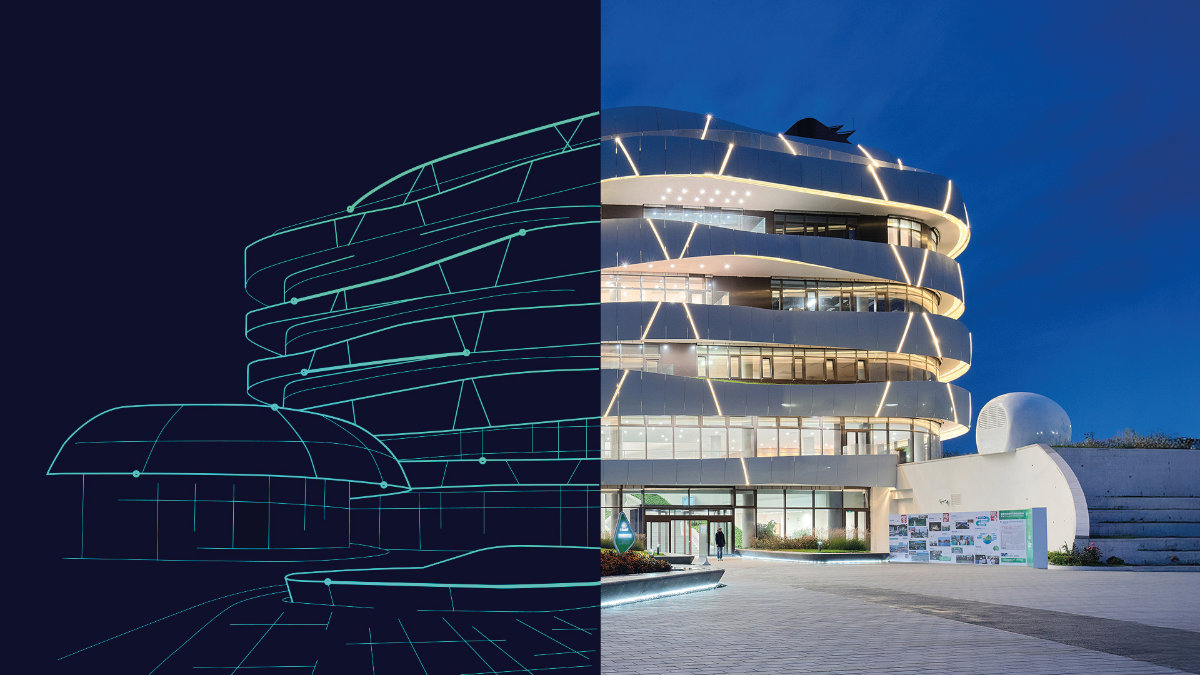
Most buildings are not yet designed to optimize themselves and make effective use of available data – but the Siemens Smart Building Assessment can change that.
Buildings account for nearly 40 percent of global energy consumption – more than the transportation sector and more than heavy industry. Siemens Smart Building Assessment (SBA) was developed to change that. Most organizations don’t have an energy problem; they have a transparency problem. Over time, systems deviate from their optimal configuration. Automation logic that made sense at the time of installation no longer reflects how a building is actually used. Small inefficiencies quietly – and invisibly – add up over the years. The SBA puts an end to this lack of transparency. It is a structured, software-based diagnostic service that examines how building systems actually perform under real operating conditions. Based on the international ISO 52120 standards, it provides insights that are comparable and actionable – not only for the facilities team, but also for regulatory agencies, auditors, and decision-makers at the executive level. The result is a prioritized roadmap – developed in collaboration with a team of Siemens experts – that clearly identifies where the greatest potential lies.
More Than Just the Energy Bill
Energy optimization directly reduces operating costs and frees up funds for higher-value investments. Early detection of system anomalies prevents failures that cause costly downtime and emergency maintenance. Measurable CO₂ reductions support ESG reporting, regulatory compliance, and the growing expectations of investors and tenants alike. And optimized system performance extends the service life of equipment. The SBA has the greatest impact on organizations where building performance directly affects operating costs, compliance obligations, or service continuity. These include commercial real estate, healthcare facilities, data centers, and manufacturing and logistics facilities. The buildings that will shape the next decade of business performance are not necessarily the newest or the largest. It will be those that are managed intelligently – where systems are optimized, inefficiencies are identified early on, and every operational decision is based on real data. Siemens Smart Building Assessment provides the clarity needed to get there.
Siemens is implementing a comprehensive energy optimization project at the Hotel Schwarzbrunn.
Project
Listen to article
A Place to Relax
0:00
0:00
1.0x
Forward-thinking measures ensure energy-efficient operations at the Hotel Schwarzbrunn in Tyrol – while providing guests with the highest level of comfort.
Wellness and well-being have been part of the history of the town of Stans for over 130 years: The first Kneipp facility in Tyrol was located here from 1890 until World War I. Today, vacationers can relax at the beautiful Hotel Schwarzbrunn – and do so in a very energy-efficient way. The hotel operators have worked with Siemens to develop a solution that ensures both maximum comfort for guests and lower energy consumption. With its 121 guest rooms, a 3,000-square-meter spa area featuring its own high-quality spring water, and a breathtaking view of the surrounding Alpine panorama, this hotel is truly one of a kind. Thanks to the measures implemented, the operators save approximately 110,000 euros in energy costs each year – meaning the measures will pay for themselves in just five and a half years. And that’s not all: Efficient energy use also leads to CO2 savings – around 112 metric tons per year at the Hotel Schwarzbrunn. This is something that particularly pleases Helmut Gschwentner, co-owner of the hotel: “As a 4-star superior wellness resort, we at the Hotel Schwarzbrunn not only place the utmost importance on the complete well-being of our guests, but also feel a deep sense of responsibility toward the environment.” To significantly reduce our environmental footprint, we have decided to undertake a comprehensive energy optimization project in close partnership with Siemens. “It was important to us not just to tweak one aspect, but to completely overhaul our energy management system.”
The Siemens building management platform, Desigo CC, ensures optimal use of resources.
The Siemens experts have succeeded brilliantly in this endeavor: Today, a PV system provides the building with its own electricity. Throughout the entire heating distribution system, the measurement, control, and regulation technology (MSR) previously in use was replaced by an efficient new Siemens Desigo CC building management platform. By integrating HVAC (heating, ventilation, and air conditioning) systems with installed sensors, Desigo CC ensures a healthy indoor climate while reducing energy consumption through optimized resource usage based on schedules, occupancy, and weather data. In the control system, fixed setpoints for room temperatures and outdoor temperatures have been preset. Based on these values, the control system signals to the heating system whether to increase or decrease the heat supply. To optimize power consumption from the public grid, a voltage management station has been installed: It stabilizes the fluctuating voltage level of the grid to a constant value, thereby preventing inefficient operation of the existing motors and loads and reducing energy consumption. The ventilation systems and the system hydraulics have also been optimized: Thanks to the installation of new duct sensors and the integration of existing ones, the air flow is now controlled as needed.
“We decided to undertake a comprehensive energy optimization project with Siemens .”
Helmut Gschwentner, , co-owner of the Hotel Schwarzbrunn
High comfort despite low operating costs
“The measures developed in collaboration with the Hotel Schwarzbrunn had three main goals: to maintain the hotel’s customary high level of guest comfort, to save energy at the same time, and to carry out the renovations while the hotel remained open for business without any inconvenience to guests – and we succeeded in doing all of that,” says Siemens project manager Clemens Stern.
And for Helmut Gschwentner, too, the result of the renovations is a win-win situation across the board: “We’re conserving valuable resources, significantly reducing our operating costs, and at the same time offering our guests a climate-friendly vacation experience with the high level of comfort they’ve come to expect.” “Siemens’ professional support and in-depth technological expertise were key to our success in turning this important vision of a future-oriented hospitality industry into reality.”
Effective immediately, the hotel is implementing a policy whereby all of these measures, taken together, ensure the responsible use of resources – without compromising on comfort.
Siemens experts gave presentations on sustainability.
Webinars
Listen to article
A Knowledge Edge Through Webinars
0:00
0:00
1.0x
In our four-part webinar series on “Sustainability,” Siemens experts will demonstrate how companies can position themselves for the future: from innovative technologies for energy systems to AI-powered building optimization, holistic sustainable electromobility, and circular production.
Sustainability in Practice: Designing Energy Systems for the Future
The energy transition and electrification are increasing pressure on grids and facilities – both from a regulatory and economic perspective. Learn through real-world examples how Siemens uses hardware, software, and services to enable sustainable solutions: from charging infrastructure and IoT energy monitoring to predictive maintenance and retrofits.
When Buildings Learn to Think – AI for Efficient Operation
AI can significantly support sustainability goals in building operations – provided the data foundation is sound. Find out why a clear data strategy is key and how AI solutions are already driving innovation today – from data-driven efficiency to smarter, more sustainable building operations.
Electric mobility is truly sustainable only when vehicles, charging infrastructure, buildings, the power grid, and data work together intelligently. We’ll highlight the key levers – from smart charging and load management to energy management and data transparency, all the way to scalable site and grid integration – including possible real-world examples.
Circular Production – Accelerating the Circular Economy Through Digital Technology
How can we achieve circular production – from raw materials to recycling – at the highest level of resource utilization? In this webinar, we’ll outline reuse, remanufacturing, and recycling – and show how digital technologies can help better integrate secondary raw materials, make material flows more transparent, and keep value within the circular economy.
Modern measurement and control technology at WIFI Salzburg.
Project
Listen to article
Perfect Conditions
0:00
0:00
1.0x
Siemens installed state-of-the-art measurement, control, and regulation technology in a WIFI Salzburg training building – always with the goal of achieving maximum energy efficiency and the best possible comfort.
Building C of the Salzburg Economic Development Institute – WIFI for short – houses various training rooms, several offices, and a career experience center on the ground floor, where visitors can learn about and experience different career fields. The measurement, control, and regulation systems in this building were upgraded to the latest standards as part of a comprehensive renovation. “The technology installed was from a competitor,” reports Georg Hofer of Siemens, “but for this project, we were able to win them over with our solutions.” After all, WIFI Salzburg had already had positive experiences with Siemens in the past. “This has helped us once again become the preferred partner for optimal building and indoor conditions.”
The entire measurement, control, and regulation system for the HVAC systems needed to be replaced – specifically, the heat pumps in the 4-pipe system for heating and cooling, three ventilation systems, and seven small ventilation systems with exhaust fans. In addition, there was individual room control for the entire building complex, featuring airflow controllers, fan coils, underfloor heating, and occupancy detection. “WIFI’s requirements were, on the one hand, a modern regulation and control system, and on the other hand, achieving maximum energy efficiency and comfort,” Hofer continued.
Implementation in Phases
The new open and freely programmable Siemens PXC controllers were a perfect fit for this requirement profile; they are virtually tailor-made for buildings like this one. Georg Hofer: “When combined with our individual room control, this creates a perfect system.” “All in all, the HVAC system has well over 300 data points across two controllers – 78 individual room controllers in 68 rooms spread across six floors further illustrate the scale of the project.” True to the motto “Everything from a single source,” Siemens expanded its building technology portfolio to include a fire damper bus featuring an FC2040 system. By the numbers: 4 loops, 96 FDCIO224 (input/output modules), 108 fire dampers. “Perfect indoor conditions are no accident – they are the result of precise planning and integrated building systems,” emphasizes Georg Hofer. “The renovation work was carried out smoothly in phases over the course of about 1.5 years while classes and office operations continued as usual, and was completed on schedule – that, too, is part of the perfect overall package.”
Comfort and safety in the training rooms, thanks to Siemens technology.
Energy efficiency solutions in the buildings of the Federal Ministry for LUK.
Project
Listen to article
Efficiency in Public Service
0:00
0:00
1.0x
The BMLUK relies on the Federal Contracting model in its departments, with Siemens Austria as its partner.
The Federal Ministry of Agriculture and Forestry, Climate and Environmental Protection, Regions, and Water Management – BMLUK for short – is responsible, among many other things, for climate and environmental protection in Austria. It goes without saying that we also ensure the efficient use of energy and other resources within our own departments. To achieve the best possible results, the BMLUK has been relying on the federal contracting program with Siemens Austria as its partner for over 20 years, with the goal of improving energy efficiency in buildings. Siemens guarantees energy savings, and the investments are financed from these savings. Existing energy-saving potential in building systems is realized through targeted modernization and optimization. This leads to lower operating costs and increased value. The required investments will pay for themselves through savings on energy and operating costs over the term of the contract.
From 2026 to 2035, in addition to tried-and-true measures such as monitoring and data analysis, the feasibility of ground-mounted PV systems with container-based energy storage will also be assessed.
This year, the partnership between the BMLUK and Siemens was extended to include a third project phase. During the period from 2026 to 2035, additional energy-efficiency solutions will be analyzed and implemented. In addition to tried-and-true measures such as monitoring and data analysis of measurement, control, and regulation technology, as well as the resource-efficient conversion of lighting to LED technology, the feasibility of ground-mounted PV systems with container-based energy storage is also being evaluated. “Energy Flexibility Services” ensure the ideal balance between energy supply and demand. The resulting energy savings – which amount to approximately two million euros over the course of the project – will finance the entire project.
In other words, Siemens guarantees success and provides the financing up front. “Federal contracting guarantees the promised services. We are pleased to see how much our shared commitment to efficient energy use brings us together. “Precise data analysis and optimized operations tailored to those insights play a key role in reducing energy consumption,” emphasizes Karlheinz Pertl, Head of Energy Service at Siemens Austria. “Federal contracting has become an indispensable model for us. Through targeted investments, we increase the value of our buildings while also enhancing comfort. “We are aware of our role as a role model, and with this project we are sending a strong message about sustainability and climate protection,” emphasizes Andreas Bauer, the department head in charge at the ministry. “The feedback on federal contracting from government agencies across Austria has been consistently positive. “That is why we have decided once again to continue the program,” adds Ingrid Wohlfahrt, an energy expert at the BMLUK.
White Space Cooling Optimization at the Hrvatski Telekom Data Center in Zagreb.
Project
Listen to article
A Cool Solution Using AI
0:00
0:00
1.0x
Thanks to smart control systems and artificial intelligence, a breath of fresh air is blowing through Hrvatski Telekom’s data center in Zagreb – and that’s meant quite literally.
Together, they implemented a “White Space Cooling Optimization (WSCO)” project in which AI automatically regulates the airflow in the recirculating air cabinets, thereby significantly reducing energy consumption and operating costs.
Artificial Intelligence – The New Cool
Anyone who thinks a data center is just a room full of servers hasn’t factored in the heat. The numerous servers generate large amounts of heat – and too much of it can be costly: In addition to high energy costs, there is also a risk of system failures if the room temperature is not right. The solution? AI, sensors, and smart control! The WSCO system measures temperatures, uses wireless sensor and control modules, and operates with a self-learning AI engine. Operators can keep an eye on everything via a system console – cooling is regulated dynamically and automatically.
Clear Benefits for Business and the Environment
Martin Lang, Head of Smart Infrastructure Buildings at Siemens Austria, emphasizes: “With this AI solution, we are achieving unprecedented energy efficiency in the data center.” Operating costs are falling by a six-figure amount each year – while maintaining maximum uptime and minimizing the risk of outages. “This makes the data center more cost-effective and – in the best sense of the word – greener for Hrvatski Telekom.” The WSCO concept comprises both technical and procedural aspects: Temperature measurements are taken with precision using thermistors, while wireless sensors, control modules, and an intelligent AI engine form the backbone of the system. During the process, an optimization loop ensures continuous improvements, enabling the elimination of up to 99 percent of typical hotspots in a data center. In addition to the standard efficiency gains, the technology also enables optimized maintenance by ensuring that components are subjected to lower and more consistent loads.
Innovation That Brings People Together
Ivan Visković, Head of the Core Network and Services Sector at Hrvatski Telekom, is pleased with the benefits: “With WSCO and AI-based cooling, we have improved the efficiency of our infrastructure, eliminated hotspots, and extended the lifespan of our equipment.” The partnership between Siemens and Hrvatski Telekom is a striking example of how innovative technologies can enhance both energy efficiency and reliability. With intelligent cooling, optimized maintenance, and sustainable resource management, the data center is well-equipped to meet the challenges of tomorrow. This way, digitalization becomes not only economically beneficial but also environmentally friendly – and takes Croatia’s digital infrastructure to a new level.
Innovative charging technology for electric vehicles.
Project
Listen to article
Green Mobility in Full Swing
0:00
0:00
1.0x
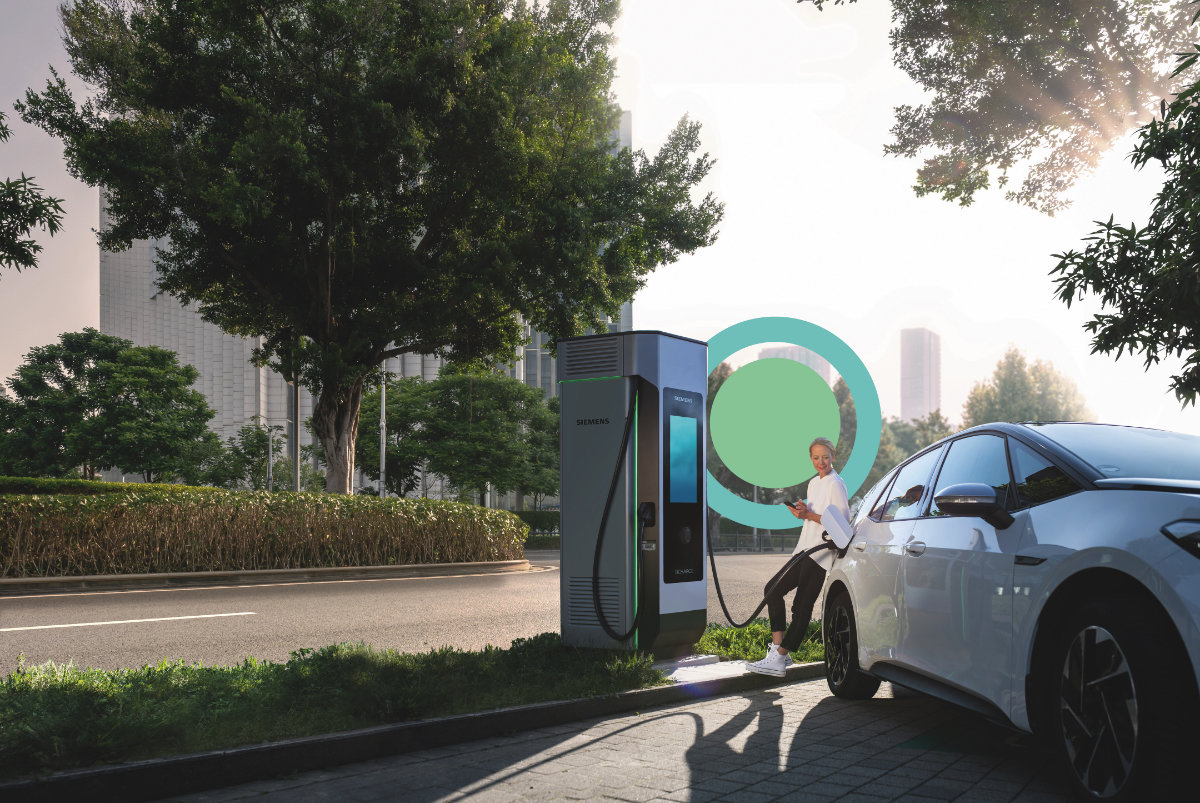
Electric mobility is at the heart of a sustainable future and is gaining significant momentum thanks to innovative infrastructure solutions.
More and more companies and regions are turning to innovative infrastructure that not only speeds up charging but also enables sustainable and flexible energy management. Whether it’s electric cars, electric buses, or energy storage systems, Siemens provides the technology needed to make the mobility transition a success.
Smart Charging for Businesses and Communities
Austrian logistics companies like Schachinger are showing how heavy-duty transport can be electrified in a climate-friendly way. More than 20 high-performance SICHARGE D fast-charging stations have been installed at Schachinger – ensuring that electric trucks are reliably powered and making the logistics sector more sustainable step by step. The Austrian car dealership Ortner also relies on modern charging solutions from Siemens to ensure that both private and commercial electric vehicles are flexibly and efficiently powered by green energy. This turns every location into a true energy hub.
In the Fast Lane for Local Transit
Public transportation is also leading the way in this transition: In Amstetten, the electric buses operated by N-Bus GmbH are powered by regionally produced green electricity. Cloud-based systems such as DepotFinity optimize charging times – ensuring that electric buses are always ready for service when needed. The result: no emission spikes, full flexibility, and reliable uptime for the entire fleet.
Power for Everyone
The partnerships with Ortner, Schachinger, and N-Bus demonstrate how digitalization, renewable energy, and modern infrastructure come together to form a comprehensive solution for sustainable mobility. Energy flows can be intelligently managed, peak loads can be avoided, and operating costs can be reduced. A win for businesses, regions, and the environment. Whether in private transportation or public transit, Siemens is making e-mobility smarter, more efficient, and more sustainable, and is ensuring that the mobility transition moves full steam ahead.
Siemens Flexibility Services optimize energy systems in buildings.
Portfolio
Listen to article
Incredibly Flexible
0:00
0:00
1.0x
With its Flexibility Services, Siemens is introducing a highly innovative building solution to the market designed to best address the growing challenges of the energy transition.
Energy costs, which have risen sharply in recent years, are a burden on businesses and households. With the goal of significantly reducing energy costs, Siemens has developed Flexibility Services, a solution that ensures the intelligent optimization of the energy system in buildings. This approach leverages the flexibility potential of the building’s components through variable energy rates and also reduces costly peak loads.
Based on advanced algorithms such as Model Predictive Control (MPC) and Machine Learning (ML), these services optimize energy systems in existing buildings. This is made possible by the new Electricity Industry Act – through increased competition and more flexible rates in Austria. Flexibility Services enable companies to respond early to new regulatory frameworks and thus capitalize on future opportunities in a targeted manner. A modern flexibility management system makes it possible to economically tap into the spot electricity market through smart load shifting, optimized use of proprietary generation and storage systems, and the reduction of grid fees.
Siemens is leveraging the opportunities offered by the flexibility system to profitably capitalize on the changing conditions in the spot energy market. Flexibility Services is ISO 27001-certified and was developed and tested as part of the research activities of the Aspern Smart City Research (ASCR) research association in aspern Seestadt.
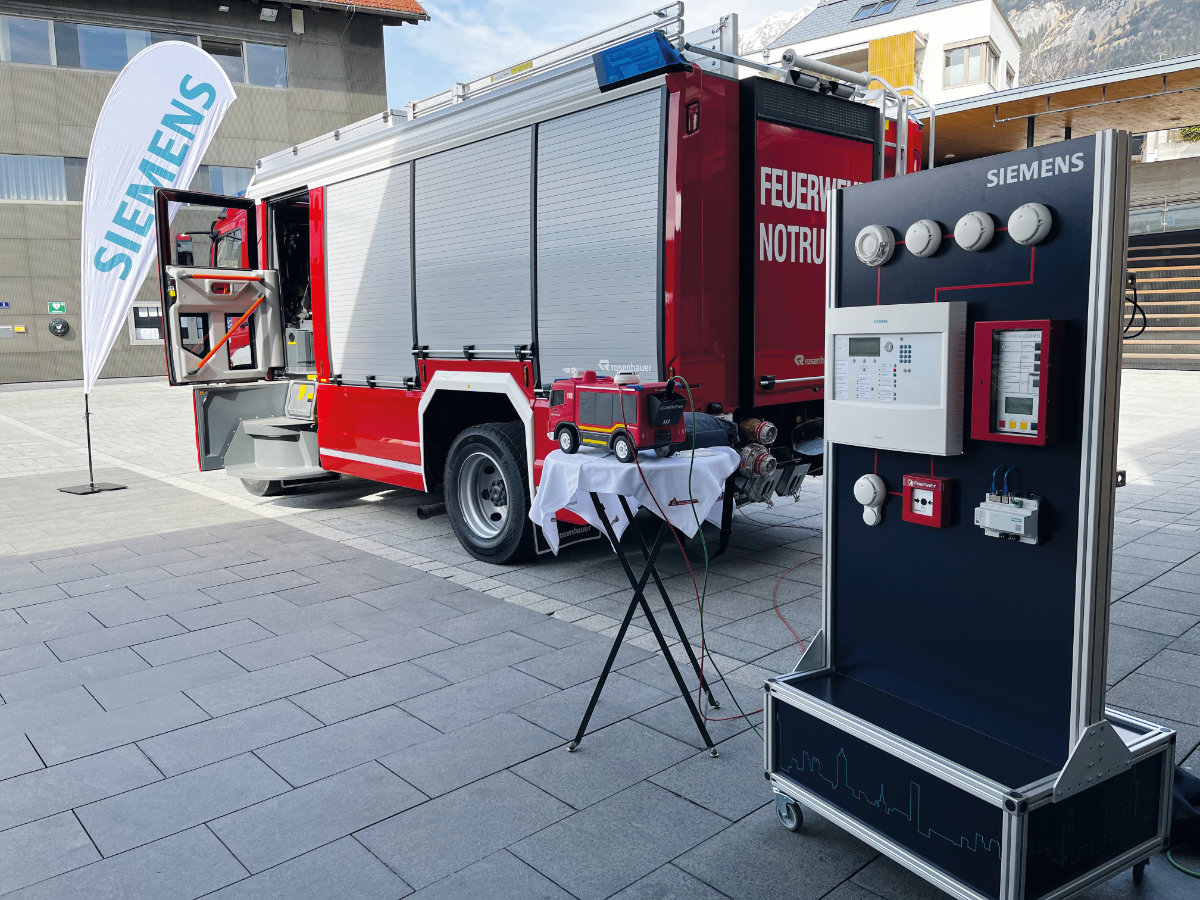
New Siemens Fire Safety Solution for Fire Trucks Unveiled at a Symposium in Tyrol.
This year’s Fire Safety Symposium in Rum provided Siemens with an ideal platform to showcase its products and services. At the event in late March, there was a presentation on the topic “Digitization in Tape Preservation.” A promising young technical talent from the Tyrol branch was also able to gain hands-on experience at the event: Philipp Korsitzky is completing a mechatronics apprenticeship in the field of fire protection, where he installs, commissions, and maintains fire alarm systems.
One of the highlights of the event was the live demonstration of Siemens’ new emergency vehicle interior monitoring system. The Fire Safety experts, in collaboration with the Dornbirn Fire Department, have developed an innovative solution for fire protection in vehicle interiors, thereby setting a new standard for the safety of emergency response organizations. This is because the fire load has increased significantly in recent years due to the growing number of batteries, chargers, and various electronic equipment on board emergency vehicles.
Our company offers innovative digital fire safety solutions that utilize cutting-edge technologies such as the IoT to detect and prevent fires early on. These intelligent systems enable predictive maintenance and optimized operations by analyzing data in real time. By integrating fire alarm systems with other building management systems, we create a comprehensive security infrastructure that ensures the protection of both lives and property.